
Pseudolachnostylis maprouneifolia
Pseudolachnostylis maprouneifolia
Description
Growing requirements
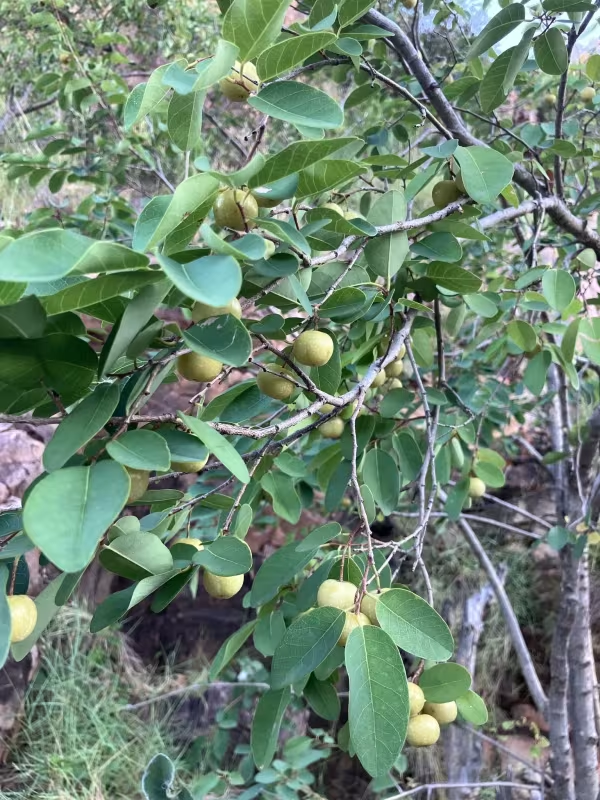
Pseudolachnostylis maprouneifolia belongs to the Phyllanthaceae family. This deciduous tree can grow between 3 and 15 meters in height in its natural habitat, often taking the shape of a spreading shrub or a small, wide-crowned tree.
This species is native to the tropical and subtropical regions of Africa. It is widely distributed across countries such as Angola, Zambia, Zimbabwe, Mozambique, and Tanzania, thriving in dry forests, savannas, and rocky slopes with excellent drainage.
The plant exhibits high adaptability to various soil types, including sandy and rocky substrates. It prefers open areas with abundant sunlight and is capable of enduring prolonged drought periods typical of the African climate.
Botanical features include the development of small yellowish-green flowers and fruit, which are small spherical capsules. The tree's foliage has a distinct texture that provides the plant with an ornamental appearance throughout the growing season.
The economic use of the species is diverse: its wood is highly valued for its strength and resistance to borers, making it useful in local construction. Additionally, the fruits of the tree are utilized in traditional medicine and serve as a dietary supplement for local communities during food scarcity.
Main diseases and pests
Like many tropical woody species, Pseudolachnostylis can be affected by specific insect pests, including various moth larvae that feed on its leaves.
Fungal infections may occur during periods of excessive moisture or poor air circulation, leading to root system decay or the development of leaf spots.
Damage to the trunk often exposes the tree to secondary infections caused by wood-boring beetles. Mechanical injuries to the bark reduce the tree's overall vigor and commercial value.
Young seedlings are particularly vulnerable to browsing by herbivores, which remains a critical factor for the natural regeneration of the species in the wild.
To maintain plant health in agroforestry systems, it is recommended to conduct sanitary pruning of affected branches and ensure proper moisture management within the root zone.