
Pseuderanthemum repandum
Pseuderanthemum repandum
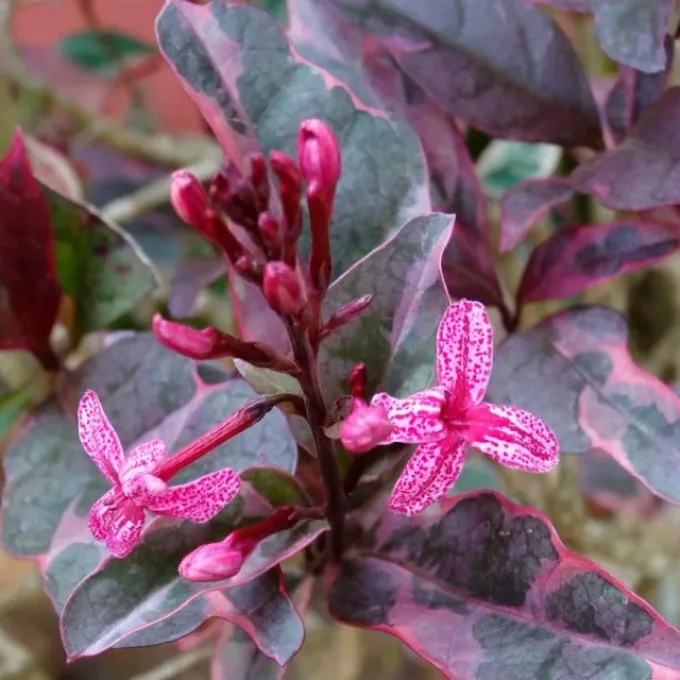
Description
Growing requirements
Pseuderanthemum repandum is a distinguished member of the Acanthaceae family, known for its lush tropical foliage. Native to the humid regions of Southeast Asia, this species has adapted to thrive in sheltered environments where conditions mimic its natural forest habitat.
Temperature management is critical for this crop; it requires a warm climate, ideally between 20°C and 26°C. It is sensitive to cold drafts and sudden drops in temperature, which can lead to leaf drop or stunted growth during the winter months.
The plant demands a high-quality, well-draining potting medium rich in organic matter. A mixture of peat, perlite, and decomposed leaf mold creates an ideal substrate that balances moisture retention with essential root aeration.
Light requirements involve bright, indirect exposure. While the plant can tolerate lower light levels, its foliage vibrancy is best preserved with consistent, soft light throughout the day. Excessive direct sun will scorch the leaves and fade their unique patterns.
Agrotechnical care includes consistent watering schedules. The soil should remain slightly moist but never waterlogged. Fertilization is essential during the growing season to ensure robust stem development and healthy leaf production.
Main diseases and pests
Spider mites are the most common pests associated with Pseuderanthemum repandum. These tiny arachnids thrive in low humidity, making regular misting a vital part of pest prevention for indoor cultivators.
Mealybugs can also infest the plant, usually clustering in the junctions of stems and leaves. If detected early, physical removal with cotton swabs dipped in alcohol is often sufficient; severe cases may require systemic insecticides.
Root rot is a major threat caused by overwatering or poor drainage systems. It presents as darkening of the stem base and wilting foliage, requiring immediate intervention through repotting and reduced watering frequency.
Fungal leaf spots can occur when the foliage is kept damp for too long in poorly ventilated areas. Maintaining good airflow around the plant helps keep the leaf surfaces dry and reduces the likelihood of fungal colonization.
Monitoring for signs of nutrient deficiencies is vital, as the plant is sensitive to substrate pH. Yellowing leaves with green veins often indicate a lack of iron, which can be corrected with chelated micronutrient fertilizers.