
Pseudelephantopus funckii
Pseudelephantopus funckii
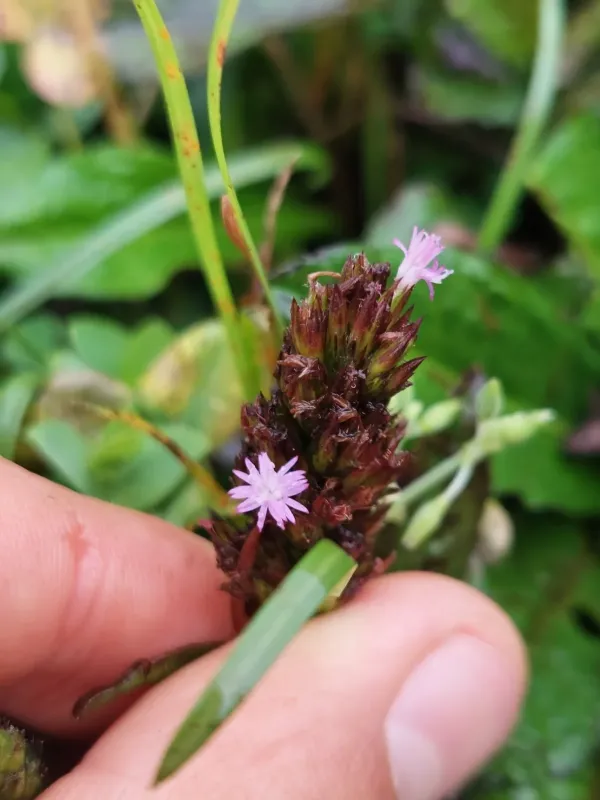
Description
Sowing dates
Sowing this crop requires strict adherence to temperature regimes, as seeds show maximum germination under high, stable humidity and soil temperatures around +25 to +28 degrees Celsius.
In its natural habitat, the seeds germinate at the beginning of the wet season, which allows the plant to gain the necessary vegetative mass before the drought period arrives.
When cultivating in specialized farms, it is recommended to perform preliminary seed stratification to increase germination percentage and ensure uniform emergence.
The optimal sowing depth is no more than 1-1.5 centimeters, as small seeds have limited nutrient reserves and require a thin layer of substrate to germinate effectively.
Sowing is carried out in rows with row spacing of up to 45 centimeters, which ensures air circulation and prevents the development of fungal diseases in the root zone.
Growing requirements
Pseudelephantopus funckii belongs to the Asteraceae family and grows naturally in tropical regions, preferring well-drained but moisture-retentive soils.
The plant demonstrates a high demand for light: full sun exposure is necessary for healthy development, although light shading is acceptable during the seedling stage.
Soils should have a slightly acidic to neutral pH, be rich in humus, and contain sufficient micronutrients to support a strong root system.
The crop is extremely sensitive to waterlogging, so when choosing a site for cultivation, avoid low-lying areas with heavy clay soils that impede proper aeration.
During the growing season, the plant requires regular fertilization with complex mineral nutrients, with particular attention to nitrogen-based compositions during the vegetative growth phase.
Main diseases and pests
The main threat to this crop is root rot, which occurs due to irregular irrigation and excessive soil moisture combined with low temperatures.
Under greenhouse conditions, the plant can be susceptible to spider mites and mealybugs, which spread rapidly in environments with poor ventilation and dry air.
Disease prevention involves strict crop rotation and regular inspection of the plants for symptoms such as chlorotic spots or signs of leaf deformation.
When pests are detected, biological insecticides are an effective control method, ensuring the production remains environmentally friendly and safe.
It is also crucial to remove weeds between rows promptly, as they can act as vectors for viral infections that affect this species.
Harvesting
Harvesting is performed during the technical maturity phase, when the concentration of secondary metabolites in the aerial parts reaches its peak value.
It is best to harvest in the morning hours, when plant tissues maintain an optimal level of turgor, ensuring better preservation of the raw material during transport.
After harvesting, the plant material requires rapid cleaning from impurities and subsequent drying at controlled temperatures to prevent the loss of bioactive compounds.
Special care must be taken during transport, as the delicate parts of the plant are easily deformed, which may reduce the market value of the produce.
Storage of dried raw material should be done in airtight containers in a cool, dry place, protected from direct sunlight to maintain the stability of the chemical composition.