
Russian wildrye
Psathyrostachys juncea (Fisch.) Nevski
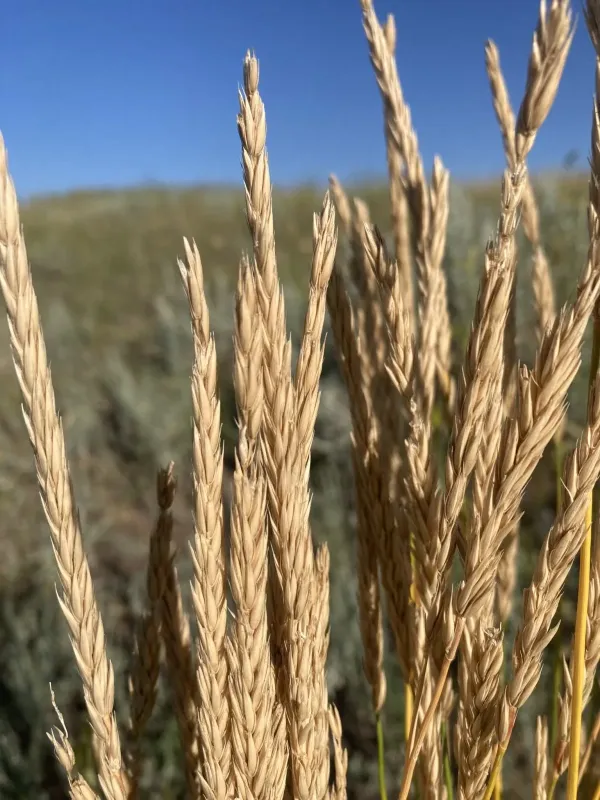
Description
Sowing dates
Russian wildrye (Psathyrostachys juncea) is a perennial bunchgrass belonging to the Poaceae family. Sowing is typically carried out in early spring, as soon as the soil can be worked, to take advantage of available soil moisture for successful germination.
Fall seeding is also an option in some climates, usually done late in the season to prevent germination before winter. This ensures that seeds are ready to sprout as soon as spring temperatures and moisture levels become favorable.
The seeding rate varies depending on the purpose and planting method, generally ranging from 8 to 12 kg per hectare. Proper seedbed preparation, including firming the soil with a packer, is essential for optimal seedling emergence.
For seed production, row spacing of 45 to 60 cm is recommended to allow for maximum growth and development of the plants. For forage or pasture purposes, narrower row spacings are more common to create a dense stand.
It is important to avoid deep sowing, as the seeds are small. A depth of 2 to 3 cm is ideal to provide enough coverage while allowing the shoot to reach the surface effectively without exhausting its energy reserves.
Growing requirements
This species is highly valued for its exceptional drought tolerance and ability to thrive in semi-arid environments. It is a dominant grass in regions where rainfall is erratic and summer heat is intense.
Russian wildrye adapts well to a variety of soil types, including sandy, loamy, and even moderately saline soils. Its deep root system allows it to reach moisture levels deeper in the soil profile than many other forage grasses.
Winter hardiness is a major trait of Psathyrostachys juncea, enabling it to survive in regions with extreme cold and minimal snow cover. It is among the earliest grasses to green up in the spring.
While it is tolerant of low-nutrient soils, it benefits significantly from nitrogen fertilization, particularly in established stands. Split applications of nitrogen can enhance biomass production throughout the growing season.
The grass is sensitive to waterlogging and flooding. It should never be planted in areas where surface water collects for extended periods, as this can lead to root decay and the total loss of the stand.
Yield
Forage yield from Russian wildrye is generally stable but depends on environmental conditions. Under favorable management, it can produce significant amounts of high-quality forage suitable for grazing or hay production.
The quality of the forage remains high throughout the season, which is one of the key characteristics of this plant. It remains palatable even after maturity, making it an excellent source of late-season grazing.
Seed yield varies depending on the specific variety and the management practices employed. With proper irrigation or in high-rainfall years, seed yields can reach levels that make it an economically viable crop.
Russian wildrye is long-lived and can remain productive for many years, often exceeding a decade under proper maintenance. This persistence reduces the frequency of reseeding and lowers long-term operational costs.
The plant demonstrates excellent regrowth potential following grazing, provided that rotational grazing techniques are used. It is important not to overgraze to maintain the plant's vigor and competitive advantage over weeds.
Main diseases and pests
The plant is generally resistant to most common fungal and bacterial diseases that affect cultivated grasses. However, in unusually humid environments, leaf spot or rust may occasionally manifest on foliage.
Insect pests such as grasshoppers and aphids can cause damage during dry periods. Effective monitoring and the use of integrated pest management strategies are sufficient to keep populations below economic thresholds.
Weed competition during the establishment phase is the primary threat to new stands. Slow initial growth makes it vulnerable to aggressive weeds, necessitating mechanical or chemical control in the first year.
Overgrazing poses a significant risk to the longevity of the stand. Continuous, heavy grazing weakens the root system and encourages the invasion of less desirable, opportunistic weed species.
Small mammals and rodents may occasionally damage seeds or young sprouts. Protecting the field perimeter and maintaining a healthy plant density helps mitigate these minor localized losses.
Harvesting
Hay harvest should occur during the late boot to early heading stage. This timing ensures the best balance between biomass volume and the nutritional quality, including crude protein and digestibility.
For seed harvest, a two-stage process is standard. The grass is swathed and allowed to cure before being combined to minimize seed loss due to the tendency of the heads to shatter when fully mature.
Monitoring the moisture level of the grain is crucial during harvest. Harvesting during the early morning or late evening, when humidity is higher, helps prevent shattering and loss of seeds in the field.
Proper drying and cleaning of seeds are necessary before storage. Storing seeds in a cool, dry, and well-ventilated area prevents degradation and maintains high germination rates for future planting.
When harvesting hay, the use of conditioning equipment is recommended to speed up the drying process. This preserves the color and nutritional profile of the hay, resulting in a superior quality feed product.