
Protium madagascariense
Protium madagascariense Engl.
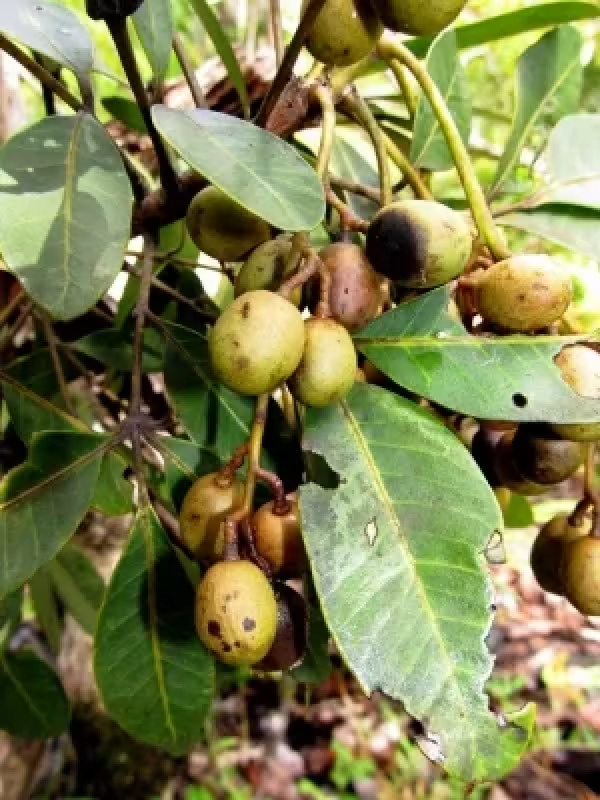
Description
Growing requirements
Protium madagascariense is a woody plant species belonging to the Burseraceae family. It is native to the tropical forests of Madagascar, where it thrives in humid conditions and specialized ecological niches.
The climate requirements for this culture include high average temperatures and consistent year-round humidity. It is strictly a tropical crop, intolerant of frost or significant drought periods that may stress the tree's physiological processes.
Soil composition must be rich in organic matter and possess excellent drainage characteristics. Heavy clay soils that tend to compact or retain excess water are unsuitable, as they facilitate root decay and fungal infections.
Agrotechnical management involves careful placement of young trees in environments that mimic the filtered light of the forest canopy. As the trees reach maturity, they require substantial space to develop their root systems and canopy structures properly.
Water management is critical during the initial establishment phase. Irrigation must be consistent to maintain soil moisture, yet the drainage must be sufficient to prevent the saturation of the substrate, which is harmful to the species' health.
Yield
The economic utilization of this species is largely based on its high-quality timber. The wood is dense and resistant, making it highly suitable for fine carpentry, artisanal crafts, and specialized interior construction projects.
Resins extracted from the bark serve as another significant product. These aromatic resins are utilized in the fragrance industry and traditional medicinal applications, reflecting the complex biochemical profile of the Burseraceae family.
Yield improvement is achieved through strategic silviculture, including regular pruning to encourage straight stem growth. This reduces natural defects in the wood grain and enhances the value of the final timber harvest.
Harvesting strategies are planned based on the growth rate of the trees, often spanning several years to ensure optimal biological and economic maturity. Modern agricultural practices focus on sustainable extraction of resins to ensure the long-term vitality of the plantations.
Potential for industrial use is also seen in the development of essential oils derived from the plant's biomass. Research continues into identifying the most productive phenotypes to improve the overall commercial yield of cultivated stands.