
Proboscidea louisianica
Proboscidea louisianica (Mill.) Thell.
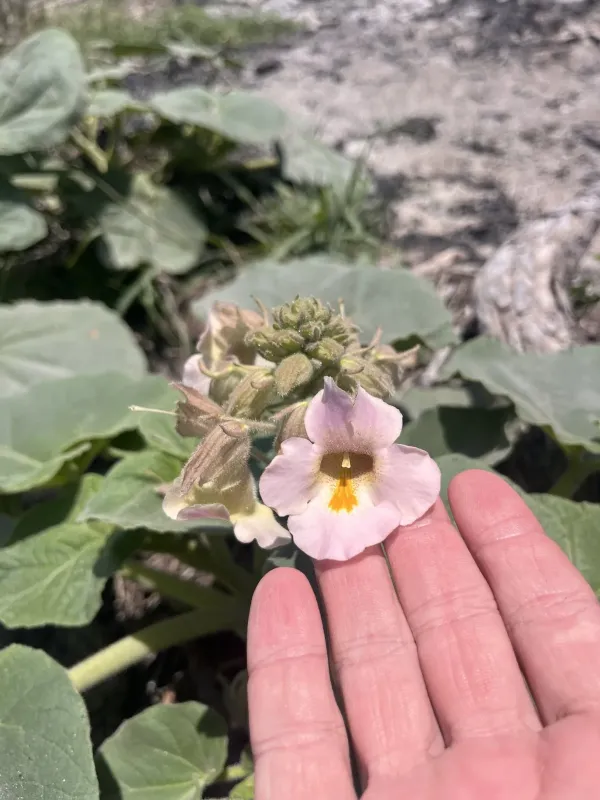
Description
Sowing dates
Proboscidea louisianica is a warm-season annual plant belonging to the Martyniaceae family. Seeds require consistently warm soil temperatures to germinate, typically above 18-20°C, so direct sowing should only occur after all risk of frost has completely passed.
The seeds possess a hard, durable coat, necessitating scarification or overnight soaking in warm water to improve germination rates. Seeds should be planted at a depth of 2-3 cm, maintaining spacing of at least 60-80 cm between plants to accommodate the wide, sprawling habit of the species.
In regions with shorter growing seasons, starting seeds indoors 4-6 weeks before the last frost is recommended. Since the plant has a sensitive taproot, using biodegradable peat pots is advisable to minimize root disturbance during the transplanting process into the field.
The optimal planting window is late May to early June. Establishing the crop during this time ensures that the plants benefit from the long, hot days necessary for vigorous vegetative development and subsequent flowering.
Effective spacing is crucial, as overcrowded plants exhibit reduced airflow, which increases the likelihood of fungal issues and complicates the harvesting of the fruit. Proper planning of the layout is a key element of the pre-sowing phase.
Growing requirements
Full sun is essential for the successful cultivation of this crop. The plant requires maximum solar exposure to thrive, as any degree of shade can significantly impede its photosynthetic capacity and fruit production potential.
The soil should be light, well-draining, and rich in organic matter. Sandy or loamy soils are ideal, as they prevent waterlogging, which the plant is highly intolerant of, particularly during the early stages of its development.
The species is notable for its exceptional drought tolerance once established. While it can survive long dry spells, providing supplementary water during the fruit-set phase will result in higher yields and more succulent pods.
A neutral to slightly alkaline soil pH is preferred for optimal nutrient uptake. On acidic soils, amendment with lime may be necessary to ensure the plant can efficiently utilize available micronutrients for healthy growth.
Fertilization should be balanced, focusing on phosphorous and potassium once flowering begins. Excessive nitrogen must be avoided, as it encourages dense vegetative growth at the expense of the reproductive pods the plant is cultivated for.
Yield
The harvest consists of immature green pods that are highly valued for their culinary properties. A single healthy plant can produce dozens of pods throughout the summer season if managed correctly through consistent picking.
Pods must be harvested while still soft and pliable. If the pod is allowed to mature fully, it develops a hard, woody, claw-like structure that is inedible, though this stage is often harvested if the goal is to collect seeds for the following year.
Continuous harvesting of young pods prevents the plant from diverting energy into seed maturation, thereby extending the production window for several weeks. This cyclical harvesting is the most effective way to maximize overall output.
Post-harvest shelf life is relatively short, requiring immediate processing, pickling, or storage in cool conditions. Due to the rapid development of the pods, inspection of the field should be performed every few days during peak season.
Yield stability is generally high due to the plant's robust nature. Under professional management, growers can expect consistent returns, provided the climate remains sufficiently warm during the flowering and fruit-setting stages.
Main diseases and pests
Aphids and spider mites are the primary pests that affect the foliage of the plant. They tend to congregate on the undersides of leaves, and if left unchecked, can lead to stunted growth and reduced vigor across the entire plantation.
Fungal diseases, such as powdery mildew, may emerge in conditions of high humidity or poor field drainage. Ensuring proper spacing and keeping the foliage as dry as possible are the most effective cultural controls against these pathogens.
Soil-dwelling pests like wireworms can damage the root system, particularly in fields previously used for cereal crops. Implementing a diverse crop rotation cycle is the best preventative measure to reduce these risks.
Biological controls, such as beneficial predatory insects, are highly effective in managing pest populations in an eco-friendly manner. Chemical interventions should be used sparingly and only as a last resort, respecting the safety of the edible harvest.
Viral infections may be introduced by insect vectors, leading to mottling or distortion of leaves. Infected plants act as reservoirs for further spread and should be rogued out of the field immediately upon detection to protect the remaining crop.