
Pristimera paniculata
Pristimera paniculata
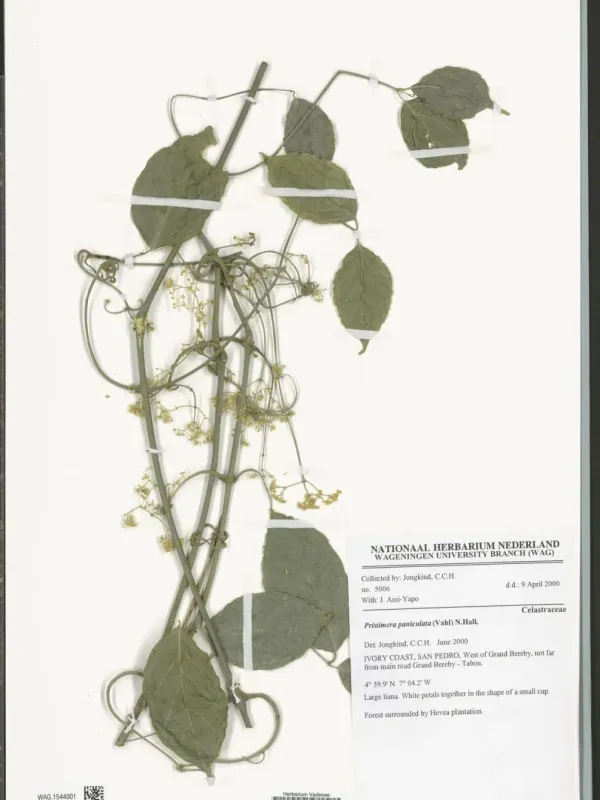
Description
Sowing dates
Pristimera paniculata is a woody climber belonging to the Celastraceae family, known for its significant presence in tropical forest ecosystems.
Propagation is typically carried out through seeds, which require specific environmental conditions to germinate effectively and produce healthy seedlings.
Sowing should be performed in a well-draining substrate mix, preferably with high organic matter content, to support early root development.
The seeds are sensitive to moisture fluctuations, thus requiring a consistent environment with moderate humidity levels throughout the germination phase.
Young plants should be transferred to permanent locations only after they have developed a strong root system and sufficient foliage.
Growing requirements
This species thrives in warm, humid climates characteristic of tropical zones, avoiding exposure to frost and prolonged cold weather conditions.
Soil requirements include excellent drainage properties, as waterlogged conditions can lead to root pathogens and stunted overall growth.
While the plant is sun-loving, it benefits from partial shade during its juvenile stages to prevent leaf scorching and desiccation.
Irrigation must be balanced; excessive water should be avoided, but the plant requires a steady supply of moisture to remain productive.
Wind protection is essential for young and fragile vines to prevent mechanical damage to stems and branches during stormy weather.
Yield
The economic output of Pristimera paniculata is focused on the harvest of its leaves and bark, which contain valuable phytochemicals.
Yield capacity significantly increases when the plant is grown under optimal light conditions and receives regular balanced fertilization.
Practicing selective pruning techniques can enhance the plant's structural integrity and promote higher biomass production per hectare.
Harvesting usually begins when the plant reaches maturity, ensuring that the biochemical concentration within the plant tissues is high.
Farmers are advised to monitor the developmental stages of each plant to determine the precise timing for a sustainable and high-quality harvest.
Main diseases and pests
Pristimera paniculata is susceptible to root rot, especially in poorly drained soils where stagnant water promotes fungal infection.
Pests like spider mites and mealybugs represent the most common threat, often appearing during periods of low environmental humidity.
Integrated pest management strategies should be employed to control these threats, prioritizing eco-friendly and biological control agents.
Monitoring for signs of leaf yellowing or stunted growth is crucial for early detection and mitigation of potential disease outbreaks.
Proper spacing between plants within a row ensures adequate airflow, which is a key factor in reducing the humidity that fosters fungal spores.
Harvesting
Harvesting must be conducted using sanitized tools to prevent the transmission of diseases between individual plants during the process.
The collected bark and leaves should be processed immediately to prevent oxidation and the degradation of active compounds stored within the plant.
Drying is performed in controlled environments with adequate shade and ventilation to preserve the integrity of the harvested plant material.
Storage should be handled in airtight, moisture-resistant packaging to maintain product quality throughout the duration of long-term storage.
Consistent quality control during the post-harvest phase ensures that the product meets the stringent standards required for professional application.