
Stuart's Primrose
Primula stuartii
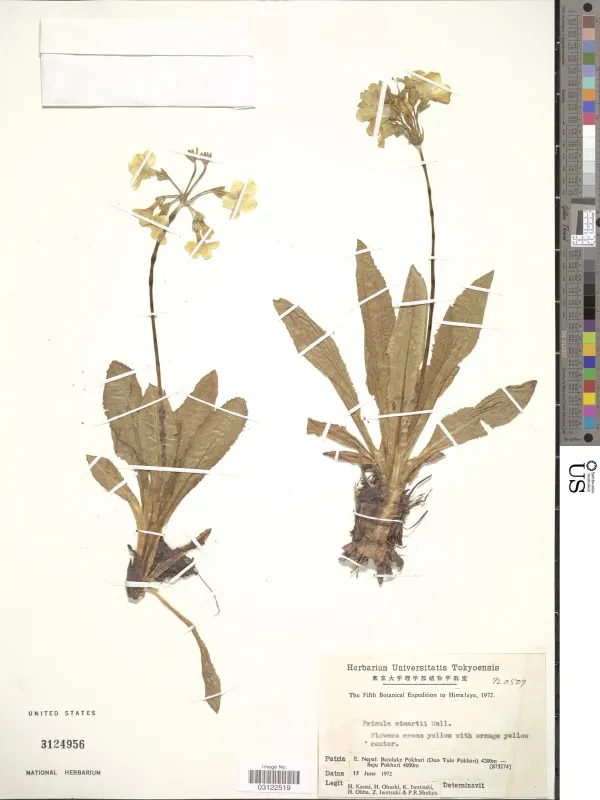
Description
Growing requirements
Stuart's Primrose (Primula stuartii) is a perennial flowering plant within the Primulaceae family, native to the alpine regions of the Himalayas.
This species is botanically distinguished by its robust rhizomes and yellow flowers, adapted to thrive in high-altitude environments with cool, moist summers.
Successful cultivation requires soil that is rich in organic matter, highly porous, and consistently moist, mimicking the well-drained slopes of its native habitat.
It demands a cool climate; therefore, it is often best suited for rock gardens or specialized alpine frames where temperature regulation is possible.
Light exposure should be managed carefully, as the plant prefers partial shade or dappled light, avoiding the intense afternoon sun that can cause physiological stress.
Main diseases and pests
The most critical threat to Primula stuartii is root rot, which is almost invariably caused by poor drainage or overly stagnant soil conditions.
Aphids can frequently colonize the undersides of leaves, especially during warmer spells in spring, requiring immediate intervention to prevent stunted growth.
Slugs and snails are major pests that target the foliage, particularly after rainfall or irrigation, necessitating the use of barriers or baits.
Powdery mildew may occur if the plants are crowded together, as this limits airflow and creates a microclimate conducive to fungal pathogens.
Maintaining cleanliness in the planting area by removing dead leaves and ensuring good ventilation is the most effective cultural practice to minimize disease risk.