
Smith's Primrose
Primula smithiana
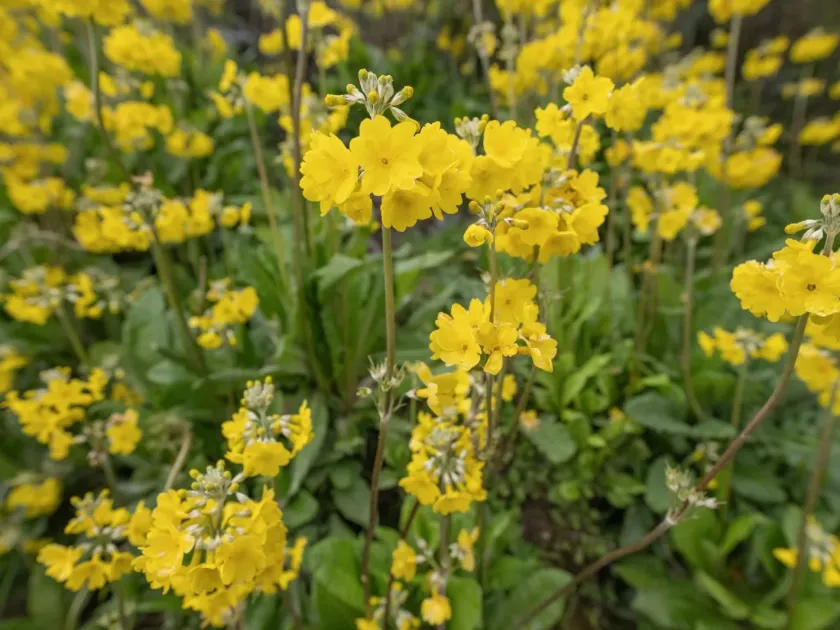
Description
Sowing dates
Sowing seeds of Smith's Primrose in ornamental horticulture and nurseries is carried out primarily in late autumn or early spring after a mandatory stratification period.
The seeds of this species have a delayed germination habit, so pre-chilling them at temperatures between 0 and +4 degrees Celsius for 4–6 weeks significantly improves germination rates.
For spring sowing, seed trays should be placed in a bright location with moderate temperatures, avoiding direct sunlight that could dry out the substrate before germination occurs.
Seedlings should be pricked out when the first pair of true leaves appears, transplanting young plants into individual pots filled with a nutrient-rich and well-aerated potting mix.
Planting out into the open garden is performed during the active vegetative growth phase, once the danger of late spring frosts has passed to allow for successful establishment.
Growing requirements
Smith's Primrose belongs to the Primulaceae family and is a perennial herbaceous plant with specific requirements regarding environmental moisture levels.
In its native range, covering the Himalayan foothills, the plant thrives in moist meadows and along stream banks, which dictates its preference for high soil moisture levels.
Optimal planting sites include semi-shaded areas protected from direct midday sun, which can cause severe leaf scorch and dehydration.
The soil must be rich in humus, have a neutral to slightly acidic pH, and possess high water-holding capacity while providing adequate drainage to prevent root rot.
The plant does not tolerate critical drying of the root ball, so regular irrigation is necessary during dry spells, ideally performed during the cooler morning or evening hours.
Main diseases and pests
The main phytopathological threats to Smith's Primrose are fungal diseases that develop under conditions of excessive humidity and poor air circulation.
The crop is frequently affected by grey mold, characterized by a fluffy grey coating on the leaves and stems, requiring immediate removal of infected plant parts.
Root rot is another significant threat, usually caused by improper irrigation practices, leading to plant wilting even when the soil appears moist.
Among pests, slugs and snails pose the greatest danger, as they actively feed on the tender foliage in high-moisture environments.
If pests or signs of fungal infections are detected, the use of specialized fungicides and insecticides is recommended, along with adjusting the watering regime to reduce humidity levels around the foliage.