
Scottish Primrose
Primula scotica
Description
Growing requirements
The Scottish Primrose (Primula scotica) is a small, rare perennial plant belonging to the Primulaceae family. It is endemic to the far north of Scotland, primarily restricted to the islands of Orkney and the northern coast of Caithness.
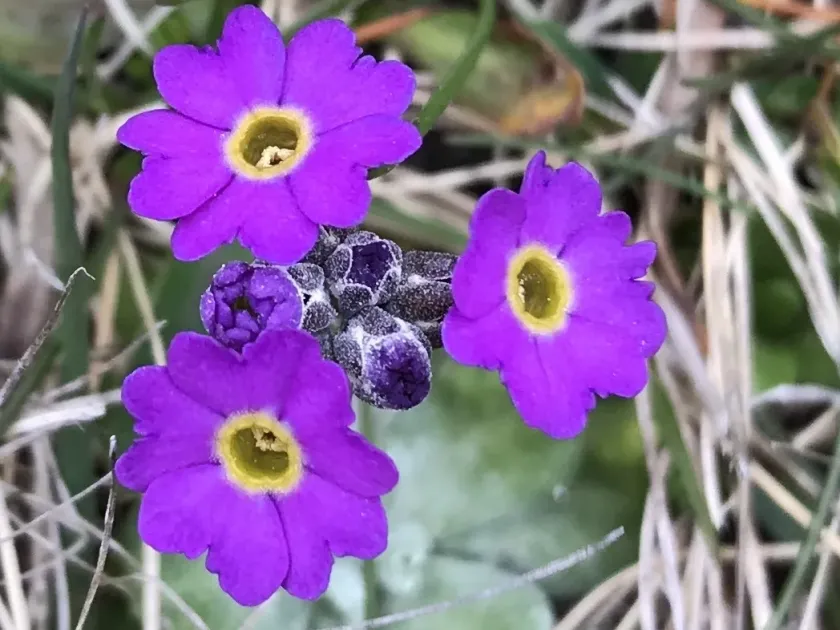
Botanically, it is recognized for its small, floury-dusted leaves and vibrant violet-purple flowers. It typically flowers twice a year, which is a distinctive feature compared to many other related species in the genus Primula.
This plant thrives in short-turf habitats, specifically on coastal grasslands, sand dunes, and limestone cliffs. It relies on a very specific set of conditions: constant moisture, exposure to salt-laden winds, and a lack of competition from taller vascular plants.
Requirements for growth include low-nutrient, well-drained soils. Agricultural cultivation is generally not practiced as the plant is protected by law and is highly sensitive to soil enrichment or fertilizers that would cause it to be outcompeted by more aggressive grasses.
Conservationists focus on managing the habitat, often using sheep grazing as a tool to maintain the short vegetation that the Scottish Primrose requires to survive. It is not a crop in the conventional sense but a vital part of the Scottish natural heritage.
Main diseases and pests
The primary threats to Primula scotica are habitat destruction and the disruption of traditional grazing practices. When grazing ceases, taller grass species rapidly shade out the primrose, leading to localized extinction.
Like many species in its family, it is susceptible to various fungal pathogens if kept in conditions of poor ventilation and excessive moisture. Root rot is a common issue when the drainage is insufficient, which often occurs in non-native soil types.
Pests such as aphids and spider mites can infest the plant, particularly in greenhouses or under non-natural conditions. In the wild, natural predators and the harsh, breezy environment usually keep these pest populations at a manageable level.
Climate change poses a significant risk, particularly the rising sea levels which threaten the coastal dunes that constitute the primary habitat of this species. Changes in precipitation patterns can also alter the fragile humidity balance the plant needs.
Due to its limited distribution, the Scottish Primrose is extremely vulnerable to any localized environmental changes. Monitoring and preservation are critical to ensure that this unique species does not vanish from the landscape entirely.