
Scandinavian primrose
Primula scandinavica
Description
Growing requirements
The Scandinavian primrose (Primula scandinavica) is a perennial herbaceous plant belonging to the Primulaceae family. It is an arctic-alpine species native to the Scandinavian Peninsula, primarily found in restricted regions of Norway and Sweden.
This plant thrives in harsh, cold environments, typically occupying calcareous meadows, gravelly slopes, and rocky outcrops. It is highly specialized to grow in nutrient-poor but mineral-rich soils that offer excellent drainage, which is crucial for its survival.
Temperature requirements for this species are strict; it demands cool, moderate summers and is unable to withstand intense heat or humidity. The plant usually remains dormant during the long winters, protected by its compact growth form and low profile.
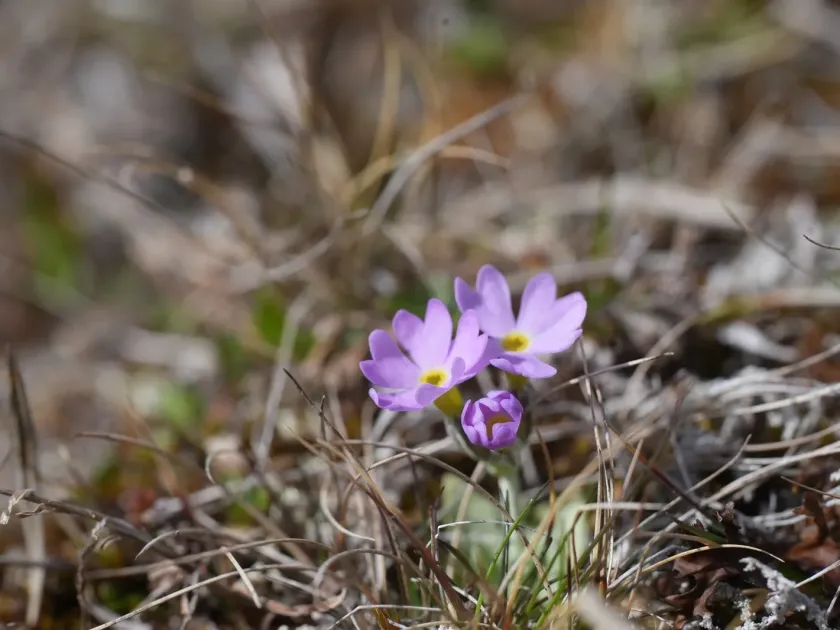
Morphologically, the plant displays a small rosette of foliage with leaves often covered in a white, farinose powder. The flowers, appearing in the short summer season, are typically shades of pink or purple with a yellow throat, arranged on short, sturdy stems.
From an agricultural or horticultural perspective, this species is not a crop. Its value is strictly botanical and ecological. Propagation is challenging because the seeds have specific stratification requirements, mimicking the freeze-thaw cycles of its native mountains.
Main diseases and pests
The main threats to Primula scandinavica populations include habitat fragmentation and the encroachment of scrubland due to shifts in land use and climate change. As competing vegetation grows taller, the primrose loses the necessary light exposure.
Potential threats include various root rot pathogens that proliferate in waterlogged conditions. Additionally, small garden pests such as slugs or snails can decimate young rosettes if they occur in artificial cultivation environments. Conservation efforts focus on protecting the fragile mountain meadows where this species persists.