
Prescottia oligantha
Prescottia oligantha
Description
Growing requirements
Prescottia oligantha is a herbaceous perennial belonging to the Orchidaceae family. It is considered a niche species within the botanical community, often sought after by orchid specialists interested in the diverse morphology of neotropical flora.
The plant originates from tropical regions of the Americas, thriving in shaded forest environments. Its distribution is closely linked to ecosystems where high humidity and consistent temperatures provide the necessary stability for its unique growth cycle.
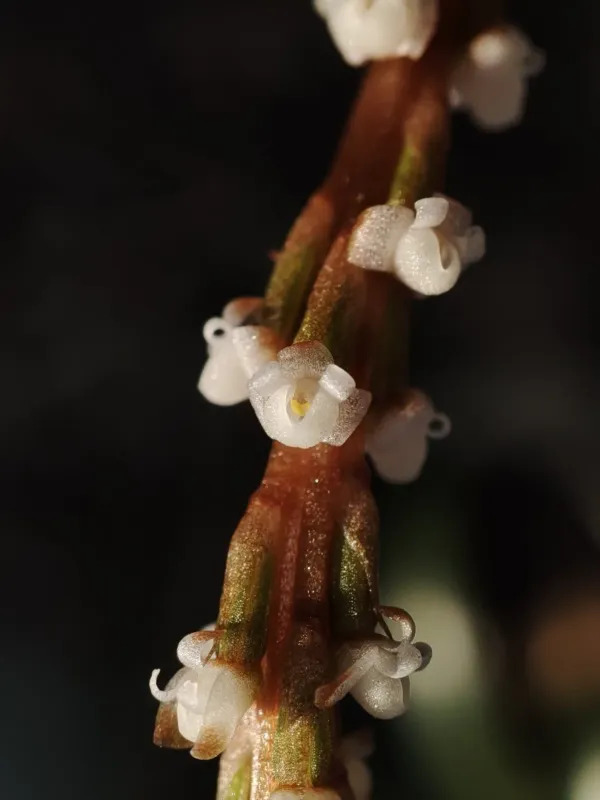
Botanically, it is recognized by its distinct basal rosette of leaves and a slender, erect inflorescence bearing small, greenish-white flowers. These morphological traits reflect an adaptation to low-light conditions, where energy conservation is prioritized over massive floral display.
Success in cultivation depends on simulating its natural forest floor habitat. This requires a well-draining, highly porous substrate that mimics leaf litter and organic debris, ensuring that roots are adequately oxygenated while remaining moist.
Environmental control is paramount, as the species is intolerant of significant fluctuations in humidity or temperature. Stable conditions between 18 and 24 degrees Celsius are ideal, requiring controlled environments like greenhouses or terrariums for optimal health and development.
Main diseases and pests
Pathogenic fungi are the primary concern for Prescottia oligantha, particularly those that thrive in stagnant, humid air. Root rot is a common outcome if drainage is inadequate or if the plant remains waterlogged for extended periods.
Insect pests, specifically aphids and scale insects, frequently target the succulent parts of the plant. A proactive management approach, including consistent monitoring and the use of insecticidal soaps, is essential to mitigate the risk of severe infestations.