
Prasiola stipitata
Prasiola stipitata
Description
Growing requirements
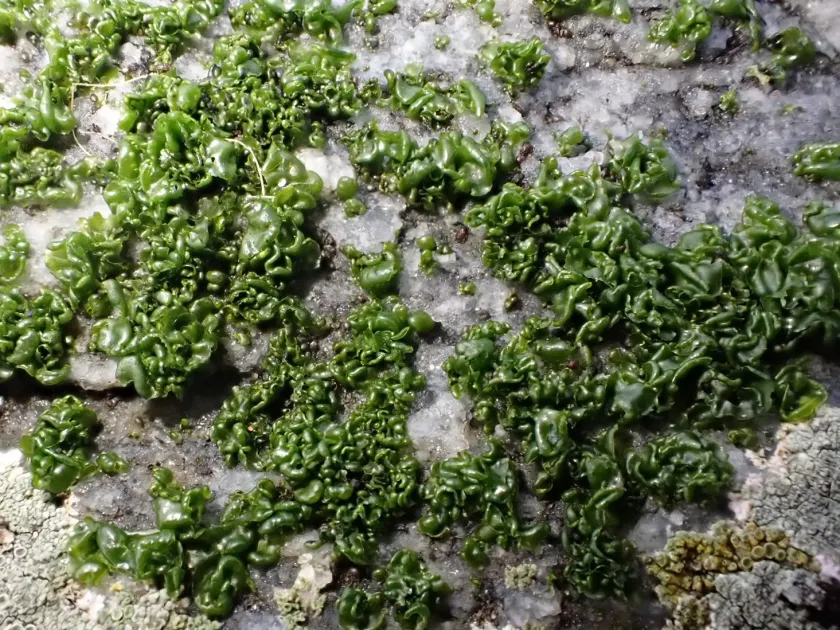
Prasiola stipitata is a primitive multicellular green alga belonging to the Prasiolaceae family. It is a marine, halotolerant species, primarily inhabiting rocky coastlines and supralittoral zones where it can withstand fluctuating salinity and moisture levels.
The culture originates from cool-temperate and polar regions, where it thrives on rocky substrates. It has a high affinity for nitrogen-rich environments, often flourishing in areas enriched by bird guano, which acts as a natural fertilizer for this algal species.
Botanically, it is characterized by a distinct, short, stalk-like base (stipe) which supports a small, green, leaf-like blade. The cells contain a single, stellate chloroplast with a central pyrenoid, reflecting its evolutionary simplicity and high efficiency in nutrient uptake.
Climate requirements include low temperature stability and high light availability, although it can manage in varied lighting conditions. The culture requires periodic water movement to ensure proper gas exchange and nutrient supply, mimicking its natural intertidal habitat.
In industrial settings, cultivation requires systems that provide controlled flow, appropriate salinity, and nitrogen enrichment. Successful growth is highly dependent on mimicking natural tide cycles to prevent the degradation of the delicate thallus.
Main diseases and pests
Primary threats to Prasiola stipitata include coastal water pollution, particularly excess organic pollution and heavy metals, which can disrupt the alga's metabolic functions and limit its growth potential.
Fungal infections and various microbial pathogens are common under conditions of poor water circulation, leading to the rapid necrosis of the thallus. High water temperatures also exacerbate the susceptibility of this species to diseases.
Competition from fast-growing ephemeral green algae and macroalgal species can suffocate Prasiola stipitata populations, depriving them of essential light and space on the substrate.
Herbivory by gastropods and other marine invertebrates is a significant factor in natural environments, requiring protective measures if the species is to be farmed on a commercial or experimental scale.
Climate change impacts, including ocean acidification and increased frequency of extreme storm events, present long-term challenges, potentially shifting current distribution ranges and causing physical damage to existing colonies.