
Prasiola crispa
Prasiola crispa
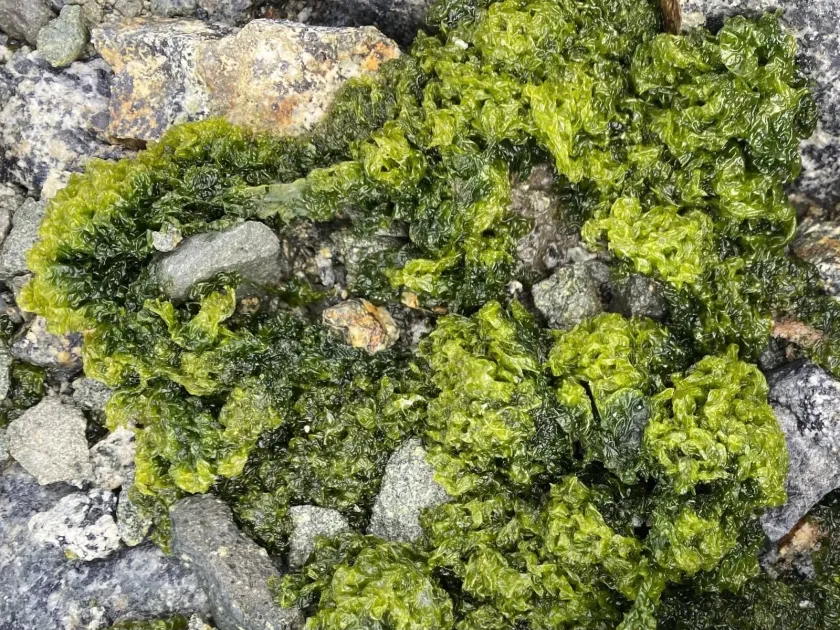
Description
Sowing dates
Prasiola crispa, a member of the Prasiolaceae family, is a green alga often found in diverse, moist environments. While not a traditional crop involving soil sowing, its cultivation relies on the inoculation of spores or vegetative fragments onto suitable substrates.
To initiate a production cycle, cultivators must prepare clean, nutrient-rich substrates, such as specialized plastic meshes or ceramic tiles, which support the algae's development. This is essential for achieving a uniform spread and maximizing yield.
Vegetative propagation is the most common method in controlled environments. Small pieces of the algal thallus are dispersed over the surface, where they adhere and begin to grow under favorable environmental conditions.
The timing of the initial colonization is crucial for managing the growth phases effectively. Industrial cultivators often work in indoor facilities where light, moisture, and temperature can be strictly controlled for optimal development.
The setup must be sterile to prevent contamination during the early stages of establishment. By controlling the initial seeding density, growers can ensure healthy colony expansion and prevent overcrowding, which would otherwise hinder growth.
Growing requirements
Prasiola crispa is highly versatile and renowned for its cold tolerance. It thrives in high-humidity environments, making it ideal for regions where other agricultural crops might struggle due to low temperatures.
Moisture is the primary environmental requirement. The surface where the algae grow must remain constantly damp, but without excessive stagnant water that could promote anaerobic bacteria growth.
The species has a high affinity for nitrogen, which is why it often appears in areas enriched with organic matter. In a controlled cultivation setup, balanced nutrient solutions must be provided to sustain rapid biomass production.
Light management is vital. While Prasiola crispa performs photosynthesis efficiently, it is sensitive to direct, high-intensity sunlight, which can induce stress. Diffused lighting is recommended for indoor cultivation.
Temperature control is key for metabolic stability, with an optimal range between 5°C and 15°C. Deviations from this range can significantly inhibit growth rates and reduce the quality of the harvested biomass.
Yield
Yield performance of Prasiola crispa depends on the meticulous management of light and nutrient availability. Under optimized conditions, the species demonstrates a high growth rate, forming dense green mats.
Harvesting is typically carried out as a multi-stage process. By cutting portions of the thalli while leaving the base intact, growers encourage rapid regeneration, allowing for multiple harvests within a single season.
The nutritional composition of the algae, including its protein and amino acid profile, is a significant factor in its agricultural value. Quality control involves monitoring the density and color of the algal mats throughout the growth period.
Instrumental monitoring of nutrient absorption and light intensity allows producers to forecast yields accurately. Proper management ensures that the algae reaches the desired maturity before harvesting begins.
The standard yield is determined by the total surface area and the rate of photosynthesis achieved. By optimizing these factors, growers can ensure a steady supply of biomass throughout the production cycle.
Main diseases and pests
Fungal and bacterial pathogens represent the primary threat, particularly in environments with poor ventilation or stagnant water. These infections can rapidly destroy algal cultures by causing tissue decay.
Contamination by competing microalgae or unwanted botanical species is a major concern. Regular cleaning and strict adherence to sterilization protocols for the substrate and water supply are essential for success.
Pests, including small invertebrates, can feed on the tender algal thalli, leading to biomass loss. Implementing fine mesh filtration systems in aquaculture facilities effectively mitigates the risk of biological contamination.
Chemical imbalances, such as the accumulation of waste metabolites, can lead to chlorosis and cellular damage. Maintaining consistent pH levels and periodically renewing the growing medium are crucial management practices.
Sudden environmental fluctuations often trigger stress responses in the algae. Maintaining stable temperature and humidity is the most effective defense against the development of common physiological disorders.
Harvesting
Harvesting is performed by manually or mechanically removing the algal mats from the substrate. The procedure is delicate, as the aim is to recover the biomass without damaging the underlying attachment structures.
Once harvested, the algae must be thoroughly rinsed to remove substrate particles and debris. Using chilled, clean water ensures that the product remains fresh and free from microbial impurities before processing.
Post-harvest processing involves gentle, low-temperature drying to preserve the algae's nutritional content. Avoiding high heat prevents the degradation of sensitive vitamins and bioactive compounds.
The dried product is packed in airtight, dark containers to prevent oxidative damage and moisture absorption. Proper storage ensures that the quality and shelf life of the algae remain optimal for the end-user.
Finally, transporting the finished product requires strict adherence to temperature and humidity controls to prevent spoilage and ensure the highest standards of safety and quality for commercial use.