
Russell lisianthus
Eustoma russellianum (Hook.) G. Don
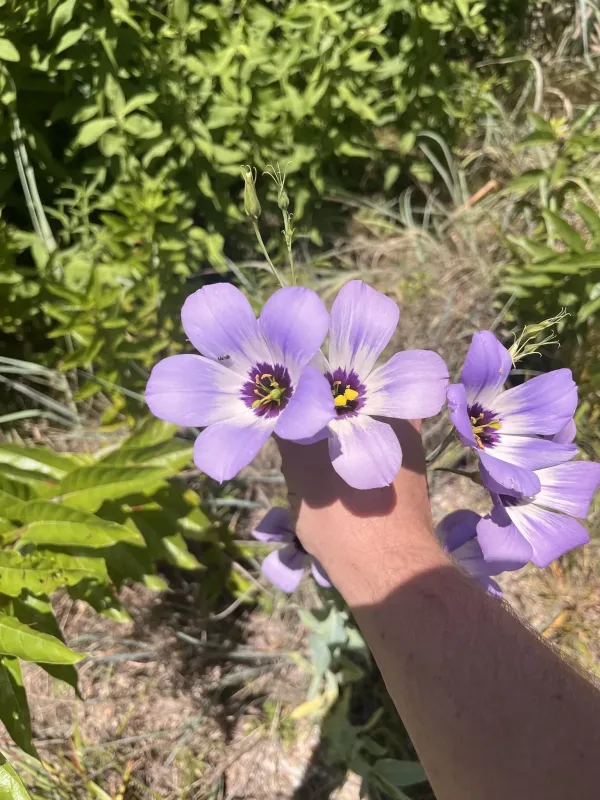
Description
Sowing dates
Russell lisianthus (Eustoma russellianum) is an annual or biennial plant belonging to the Gentianaceae family that requires a long vegetation period. In commercial production, seeds are sown between December and February to ensure high-quality output for the summer market.
The tiny seeds of the lisianthus are sown on the surface of a sterile, slightly acidic substrate. They should not be covered with soil, as light is essential for germination. Containers are covered with film to maintain 100% humidity and kept at 22–24°C.
Seedlings are pricked out at the stage of two true leaves. It is crucial to provide intensive supplemental lighting during winter months to prevent legginess and ensure proper floral bud initiation.
Transplanting to permanent sites (greenhouses or open fields) is performed only after the risk of frost has passed, as the crop is highly sensitive to cold temperatures.
When using hydroponics or plug trays, strict timeline management is vital, as the period from sowing to flowering can take between 5 to 7 months depending on the specific hybrid variety.
Growing requirements
Lisianthus thrives in well-drained, fertile soils with a neutral or slightly acidic pH (6.0–7.0). Soil compaction must be avoided as it leads to moisture stagnation, which is detrimental to the delicate root system.
The optimal temperature regime for crop development is 20–25°C during the day and 15–18°C at night. Sudden temperature fluctuations and insufficient lighting delay growth and reduce the quality of the stems.
Irrigation must be regular but moderate. The plant reacts negatively to both drying out and waterlogging, the latter of which frequently triggers root rot diseases.
The plant requires intense sunlight. Under low-light conditions, stems become weak, and the total count of blooms per stem is significantly reduced.
Fertilization should be carried out using balanced mineral fertilizers with higher potassium and phosphorus content during the budding stage to foster robust, sturdy flower stems.
Main diseases and pests
Fusarium wilt, caused by Fusarium fungi, is the most destructive disease. Prevention relies on using sterilized substrates and ensuring proper drainage to avoid excessive humidity.
Botrytis (grey mold) frequently attacks plants in high humidity and poorly ventilated greenhouse environments, manifesting as dark spots on leaves and flowers.
Thrips are major pests that suck sap from young tissues and serve as vectors for viral diseases. Regular insecticide applications are required to manage their populations effectively.
Whiteflies also pose a serious threat to lisianthus, breeding rapidly on the undersides of leaves. Consistent monitoring and pest control are necessary throughout all growth stages.
Leafminers and aphids can damage the foliage, reducing the aesthetic and commercial value of the cut flowers. Preventive fungicide and insecticide programs are essential for successful production.
Harvesting
Harvesting is performed when two to five buds are open on the stem, depending on market requirements and intended transport distance.
It is best to cut flowers early in the morning or late in the evening when plants are turgid, which ensures better vase life and stem quality after storage.
Stems are cut with a sharp tool at the level of the second or third pair of leaves from the soil surface to encourage the growth of side shoots for potential second-wave flowering.
Immediately after cutting, flowers should be placed in water treated with flower preservatives to inhibit bacterial growth and extend longevity.
Transportation is carried out in a vertical position within refrigerated chambers at temperatures of 4–6°C to preserve the aesthetic appearance and petal freshness.