
Poupartia borbonica
Poupartia borbonica
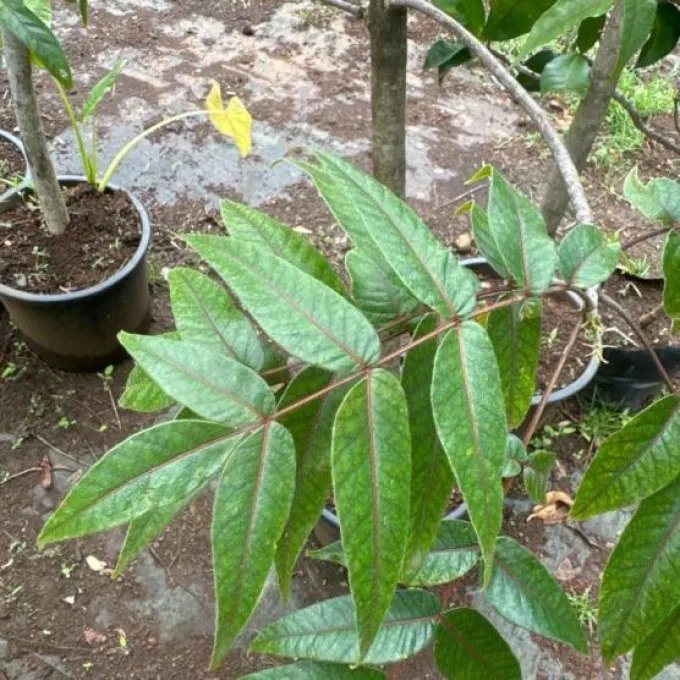
Description
Sowing dates
Poupartia borbonica is a slow-growing tree, requiring patience during its initial establishment phase. Propagation is primarily achieved through seeds, which should be planted in a well-draining, nutrient-rich medium while maintaining a tropical temperature regime of 25–28 degrees Celsius.
The hard seed coat can often delay germination, making seed scarification a recommended practice to improve moisture absorption and success rates. Fresh seeds should be sown immediately after harvest to ensure maximum viability and vigor.
When transferring saplings to their permanent location, the beginning of the rainy season is the most favorable time to ensure proper root development and survival. Young trees require partial shade and protection from intense direct sunlight during their first two years.
Spacing is essential for this species due to its wide, spreading canopy; a distance of 8–10 meters between trees is advised for large-scale plantations. Proper spacing facilitates airflow and reduces the risk of fungal diseases within the canopy.
Soil preparation should involve the incorporation of organic matter and the creation of an effective drainage system, as waterlogged conditions are highly detrimental to the root health of this Anacardiaceae family member.
Growing requirements
As a tropical species, Poupartia borbonica thrives in environments characterized by consistently warm temperatures throughout the year. It has no tolerance for frost or cold winds, making its cultivation restricted to specific tropical zones.
The tree prefers deep, fertile, and well-draining soils with a neutral or slightly acidic pH. While it shows some adaptability to different soil types, high organic matter content is essential for maximizing growth rates and overall tree health.
Adequate water is vital for this species, although it can withstand short periods of drought once established. In regions with long dry seasons, regular irrigation via drip systems is necessary to maintain soil moisture levels and sustain productivity.
Full sun exposure is required for the plant to achieve its photosynthetic potential, which in turn dictates fruit production and timber quality. Insufficient light leads to etiolation and significantly reduced yields in fruit-bearing trees.
High relative humidity is beneficial for this plant, mimicking the natural microclimates found in its native range. Stable conditions throughout the year are key to reducing physiological stress on the tree.
Yield
The yield of Poupartia borbonica is a long-term prospect, as the tree usually matures slowly before entering its peak fruit-bearing years. Growers should be prepared for a lead time of several years before the first significant harvest is achieved.
The fruits are small drupes that are consumed locally, often processed into juices, jams, and traditional alcoholic beverages. Their unique flavor profile makes them a valuable niche product in tropical fruit markets.
Maintaining consistent yield requires periodic fertilization with micronutrients and proper pruning to remove dead wood and encourage lateral growth. A balanced nutrient supply helps mitigate the natural tendency for alternate bearing in some specimens.
Productivity is also linked to the health of the tree's canopy, which must be protected from physical damage. When well-tended, a mature tree can produce a substantial volume of fruit during its active season.
Beyond fruit production, the wood of Poupartia borbonica is highly regarded for its durability. After the tree's productive lifespan concludes, the timber remains a valuable resource for high-quality furniture and construction.
Main diseases and pests
Fungal diseases affecting the root system represent the most significant threat, particularly in poorly drained soils. Preventing soil saturation through proper site selection and management is the primary defense against such pathogens.
Pests such as aphids and spider mites can attack the succulent leaves of young saplings, impeding growth and development. Regular monitoring and integrated pest management are necessary to control these populations before they cause widespread damage.
Pathogenic infections entering through bark wounds can lead to limb decay and systemic health issues. Strict sanitation, including the disinfection of pruning tools, is essential to prevent the spread of diseases within the orchard.
Weed competition can be a major issue for young trees, as weeds compete for essential water and nutrients. The application of organic mulch around the base helps suppress weed growth and maintains optimal soil moisture levels.
Environmental stress, such as extreme winds or unseasonable weather, can weaken the tree's immunity, making it more susceptible to secondary infestations and common tropical plant diseases.
Harvesting
Harvesting is a manual process due to the delicate nature of the fruits, which are highly susceptible to bruising. Harvesting should ideally take place in the cool early morning hours to maintain fruit quality and shelf life.
Determining the correct stage of ripeness is crucial, as the color of the skin changes, signaling peak maturity. Since fruit on a single tree often ripens asynchronously, multiple pickings are usually required over several weeks.
Post-harvest care involves immediate cooling and careful handling. Given the fruit's short shelf life, rapid transport to markets or processing facilities is necessary to minimize spoilage in tropical climates.
Grading is performed immediately after harvest, separating premium-quality fruit for fresh consumption from secondary fruit destined for processing. Careful handling at this stage is key to maintaining market value.
Cleanliness in the orchard following the harvest season is imperative. Removing fallen fruit prevents the attraction of pests and reduces the risk of decaying organic matter fostering disease-carrying pathogens near the root zones.