
Porphyridium purpureum
Porphyridium purpureum
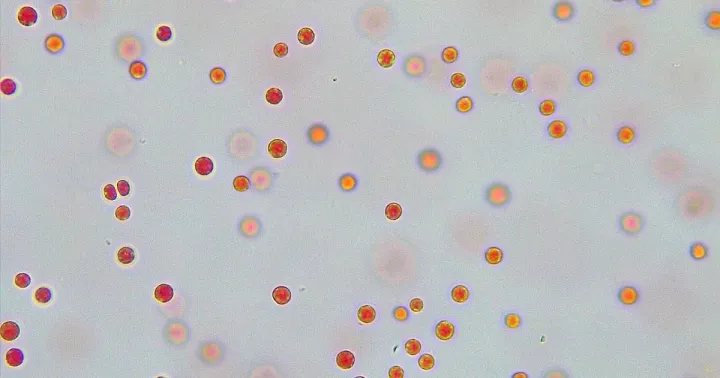
Description
Sowing dates
In industrial cultivation, Porphyridium purpureum is not sown in soil but is transferred into a nutrient-rich culture medium as an inoculum. Successful startup depends on maintaining an initial cell density that allows for rapid acclimation and colonization of the photobioreactor.
The frequency of culture renewal depends on the production method used. In large-scale closed systems, nutrient media are refreshed periodically based on metabolic monitoring to prevent nutrient depletion and waste product accumulation.
Maintaining a specific photoperiod is essential for maximizing growth. Modern operations use artificial lighting regimes that provide intense illumination during active cell division phases to accelerate biomass accumulation.
Culture purity is the cornerstone of successful production. The inoculum must be prepared under strict laboratory conditions to ensure no contamination from opportunistic microorganisms enters the reactor.
The algae reproduce through vegetative cell division. Under optimal conditions, the doubling time can be quite rapid, allowing for efficient biomass expansion in a controlled environment.
Growing requirements
Porphyridium purpureum belongs to the Porphyridiaceae family and is a unicellular red microalga. It is highly valued for its ability to synthesize and secrete complex sulfated exopolysaccharides.
Optimal temperature for growth is consistently maintained between 20 and 25 degrees Celsius. Significant deviations from this range can severely inhibit metabolic activity and reduce the synthesis of target metabolites.
The culture medium requires precise concentrations of essential nutrients, including nitrogen, phosphorus, and trace elements. Maintaining a stable pH level, typically between 7.5 and 8.2, is crucial for physiological balance.
Light availability is a primary growth factor. High-tech facilities utilize specialized LED light sources that provide optimized spectral wavelengths to enhance photosynthesis and pigment production.
Constant agitation or aeration is required to ensure carbon dioxide mass transfer and to prevent cell settling, which could lead to an uneven growth distribution within the reactor.
Yield
The yield of Porphyridium is primarily measured by the dry biomass concentration per liter of culture volume. High-performance bioreactors consistently produce substantial biomass daily under stabilized conditions.
A significant portion of the harvest is the exopolysaccharide gel, which is secreted into the medium. This valuable product is harvested through specialized separation techniques.
Production efficiency is directly linked to light penetration depth and gas exchange efficiency. Closed photobioreactors provide a significant yield advantage over open-pond systems due to better control.
Beyond the primary biomass, the algae accumulate high-value pigments like phycoerythrin. This pigment is a critical component for diagnostic kits and high-end cosmetic formulations.
Consistent production cycles ensure a reliable yield, making this crop a cornerstone of modern algal biotechnology and high-value chemical extraction.
Main diseases and pests
The primary biological threat is contamination by invasive algal strains, bacteria, or fungi that can outcompete the culture for resources. Strict hygiene protocols are essential to protect the reactor content.
Abitotic stresses, such as fluctuations in salinity or pH, pose a risk to the health of the population. Instability in the chemical environment can lead to rapid cell lysis or growth arrest.
Predatory microorganisms, including rotifers or ciliates, can rapidly consume a culture if they bypass filtration systems. Biosecurity measures must be robust to avoid such losses.
Nutrient deficiency causes physiological stress and chlorosis, reducing the organism's competitiveness. Proper monitoring of nutrient depletion is necessary to maintain long-term crop stability.
Excessive ultraviolet radiation without adequate protection can cause oxidative damage to the photosynthetic apparatus of the cells, leading to decreased yields.
Harvesting
Harvesting is typically performed using centrifugation or flocculation, methods designed to separate the cellular biomass from the culture medium efficiently. The choice depends on the scale of production.
To isolate the polysaccharides, chemical precipitation using ethanol is standard practice. This separates the gel-like substance from the liquid phase, allowing for high-purity recovery.
Modern continuous-flow centrifuges have revolutionized the harvesting process, allowing for automated and rapid recovery of biomass with minimal operational downtime.
Post-harvest, the biomass is often processed via lyophilization (freeze-drying). This method preserves the structural and functional integrity of the sensitive bio-molecules and pigments.
The final product is stored in temperature-controlled, hermetically sealed environments to prevent the degradation of antioxidants and pigments over extended periods.