
Hybrid White Poplar
Populus alba x Populus tremula var. glandulosa
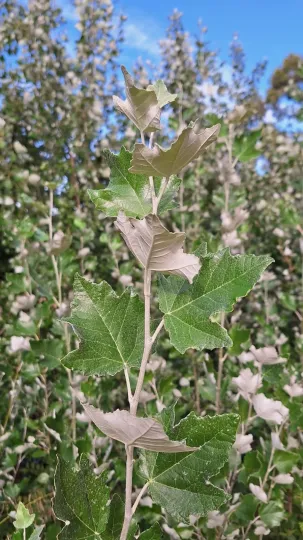
Description
Growing requirements
The hybrid white poplar (Populus alba x Populus tremula var. glandulosa) belongs to the Salicaceae family and is recognized as a high-performance cultivar. It is bred for rapid biomass accumulation and structural wood quality, making it a staple in industrial silviculture.
Successful cultivation requires deep, fertile, and well-moistened soils. While the species is highly adaptable, it thrives best in riparian environments or lands with a high water table where moisture availability is constant throughout the growing season.
The crop requires full solar exposure to achieve maximum growth rates. Shading can lead to weak, curved stems and a significant reduction in total wood volume. The ideal climate includes mild, humid summers and moderate winters, although the hybrid shows good cold tolerance.
Management practices should include proper site preparation, such as deep plowing and organic fertilization before planting. During the early development stage, weed control is essential to prevent resource competition, ensuring the saplings establish a robust root system quickly.
The commercial utility of this hybrid is vast, spanning from pulp and paper manufacturing to high-quality plywood production. Furthermore, it is increasingly utilized in agroforestry systems as a sustainable source of renewable energy and carbon sequestration.
Main diseases and pests
Poplar stands are frequently threatened by fungal pathogens, most notably leaf rust and bark necrosis. These conditions are often exacerbated by poor ventilation in dense plantations and prolonged periods of atmospheric moisture during the summer months.
Insect pests, including various species of chrysomelid beetles and leaf-miners, present a constant challenge. Severe infestations significantly reduce the photosynthetic capacity of the trees, directly impacting the final yield and tree vigor.
Integrated Pest Management (IPM) is crucial, involving the application of targeted fungicides and systemic insecticides only when economic thresholds are reached. Biological control agents, such as predatory insects, are also encouraged in sustainable forestry models.
Regular sanitation, such as removing debris and thinning out weak or diseased trees, is necessary to prevent the spread of pathogens. Keeping the plantation clear of dead organic matter reduces the hibernation sites for many harmful insect species.
Genetic diversity and the use of site-specific clones are essential strategies to improve the overall resilience of the crop against shifting disease pressures and changing environmental conditions in modern plantations.