
Viper's bugloss
Pontechium maculatum
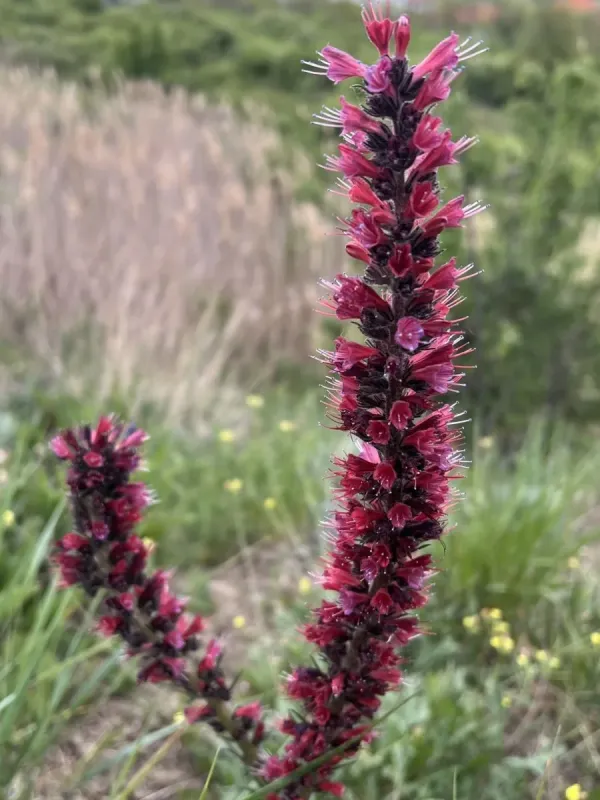
Description
Sowing dates
Viper's bugloss is a biennial plant, so sowing is typically carried out in early spring or late summer, allowing the plant to form a robust leaf rosette before the first frosts. Early spring is considered ideal as the soil is sufficiently saturated with moisture.
For high-quality germination, it is recommended to use seeders adjusted for small seeds. The sowing depth should not exceed 1.5–2 centimeters to ensure rapid and uniform seedling emergence.
The seeding rate varies depending on the intended use; when grown primarily as a honey plant, it is sown more sparsely. Denser sowing leads to increased competition, which can reduce the overall nectar productivity of individual plants.
Proper soil preparation is crucial, as the field must be free of competing weeds. Since the seeds are small, they require a fine-textured seedbed to ensure maximum contact between the seed and the soil particles.
After sowing, rolling the field is essential to accelerate capillary water rise to the seeds. This technique ensures successful germination even under fluctuating weather conditions during the spring season.
Growing requirements
Viper's bugloss is highly drought-tolerant and capable of growing in poor, rocky, or sandy soils. Its deep taproot system allows it to extract moisture from deep soil layers, where other crops would suffer from water stress.
The best performance is observed on light, sandy loam soils with excellent drainage. It is extremely sensitive to waterlogging and high groundwater levels, which often lead to root rot and plant mortality.
This crop is highly light-demanding and should not be planted in shaded areas or near dense windbreaks. Open fields allow the plant to accumulate higher sugar levels, which significantly enhances its attractiveness to pollinators.
The plant demonstrates excellent adaptability to temperature fluctuations and continental climates. Its high cold hardiness allows it to survive harsh winters without the need for additional protection.
While the plant has moderate soil fertility requirements, the application of phosphorus and potassium fertilizers can significantly extend the flowering period. Nitrogen fertilizers should be used sparingly to prevent excessive foliage growth.
Yield
The primary yield metric for Viper's bugloss is its honey production, which can range from 400 to 800 kilograms of honey per hectare under favorable conditions. This makes it one of the most valuable honey crops in agriculture.
The flowering period is extended, providing a stable nectar source for apiaries for 30–40 days. During peak bloom, the nectaries secrete large quantities of sugar-rich fluid, even during hot and dry spells.
When cultivated as a forage crop, green mass yields can reach 200–300 centners per hectare. However, the presence of stiff hairs on the stems necessitates careful handling and early harvesting to ensure quality.
For seed production, yields typically range from 3 to 6 centners per hectare. Timely harvest is critical, as the seeds are prone to shattering upon full maturity, which can lead to significant field losses.
The overall economic value of this crop is assessed by combining its honey-producing potential with the benefits of soil structure improvement and the promotion of biodiversity within the farming landscape.
Main diseases and pests
Viper's bugloss is a resilient crop, but it can be susceptible to powdery mildew. Humid and cool weather conditions promote the development of fungal infections that coat the leaves with a characteristic white film.
Among pests, various species of weevils and leaf beetles pose the greatest risk, as they can feed on young leaves during the rosette stage. Severe infestations can significantly weaken the plant's vigor.
Root rot may occur in heavy clay soils where drainage is insufficient. Damage to the root system leads to the wilting of the rosette and eventually the death of the entire plant.
In some cases, parasitic weeds such as dodder can infest the crop, severely suppressing the growth of the Viper's bugloss. Maintaining strict phytosanitary standards for seeds is the best prevention.
To minimize risks, it is recommended to practice crop rotation and avoid overcrowding in the fields. Preventive measures, such as selecting well-drained sites and managing early pest outbreaks, help keep losses at a minimum.
Harvesting
Seed harvesting is conducted when the majority of the flower spikes turn brown. Since seeds ripen unevenly from the bottom of the stem to the top, it is crucial to determine the optimal window when shattering is minimized.
Combine harvesters should be calibrated for gentle threshing to prevent mechanical damage to the seeds. A two-stage harvest method—swathing followed by threshing—is often the preferred approach to optimize recovery.
For green mass harvesting, it is necessary to cut the plants before the stems become overly lignified. Once the stems mature, they become rigid due to the stiff hairs, making the forage less palatable for livestock.
Following harvest, seeds must be cleaned of impurities and dried quickly. High moisture content during storage leads to a rapid loss of germination viability, so seeds should be stored in dry and well-ventilated areas.
Crop residues can be incorporated into the soil as green manure. The deep roots of the plant effectively loosen the soil, while the organic matter provides nutrients and improves the structure of the arable layer.