
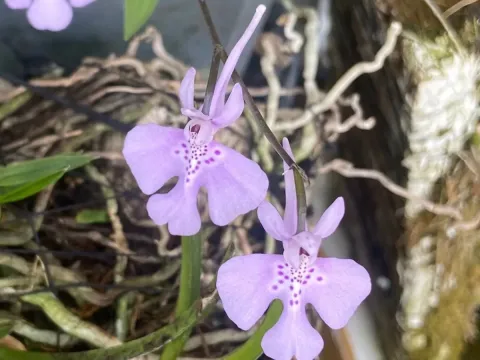
Ponerorchis
Ponerorchis Rchb.
Ponerorchis is a genus of tuberous perennial plants belonging to the Orchidaceae family. These plants are native to East Asia, including regions of Japan, China, and Korea, where they typically thrive in mountainous regions and meadows with high moisture levels.
What the section contains

Ponerorchis
Cultivating Ponerorchis requires providing an environment that mimics their natural habitat. They prefer bright, indirect sunlight, as direct harsh rays can damage their foliage. In greenhouses, diffused light is essential for healthy development and blooming.
The choice of substrate is vital for this culture. A well-draining mixture consisting of conifer bark, perlite, and sphagnum moss works best. The acidity level should be kept slightly acidic to support nutrient absorption through the roots.
Watering management is a delicate aspect of Ponerorchis care. During the growing season, the substrate must remain consistently moist. However, once the foliage begins to yellow and the plant enters dormancy, watering should be significantly reduced or stopped.
Temperature control during different stages of development is crucial. During the active phase, a moderate temperature is preferred, while the dormancy period requires a cooler environment to ensure the plant rests properly and prepares for the next season.
Root rot is the most significant threat to Ponerorchis, primarily caused by waterlogged soil and poor aeration. If the substrate does not drain effectively, the tubers can succumb to fungal decay very rapidly.
Pests such as spider mites can infest the plants, especially in environments with low humidity. These pests feed on plant sap and can cause leaf yellowing and general decline, which weakens the plant's overall health.
Effective prevention involves maintaining good airflow around the plants. Regular monitoring of the foliage helps detect early signs of pest infestation or disease outbreaks, allowing for prompt intervention before damage becomes severe.
Chemical treatments should be used cautiously. When applying fungicides or insecticides, it is essential to use products specifically formulated for sensitive orchid species to avoid damaging the plant tissue.
Sanitation practices, such as removing dead plant matter and keeping the growing area clean, significantly reduce the risk of secondary infections. Any infected parts should be promptly discarded away from healthy plants.