
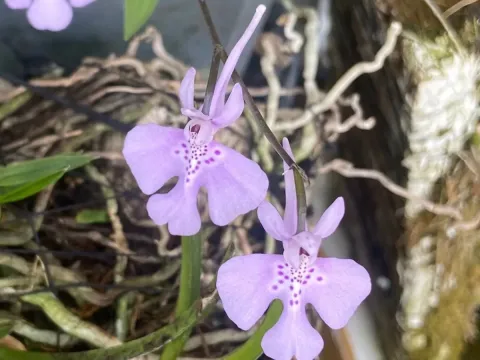
Ponerorchis
Ponerorchis
Ponerorchis belongs to the Orchidaceae family. It is a perennial herbaceous plant with tuberous roots, naturally occurring primarily in the mountainous regions of East Asia, including Japan, Korea, and China.
What the section contains

Ponerorchis
The crop prefers a moderately cool climate and requires protection from direct sunlight. The optimal planting site is partial shade or areas with diffused light that simulate the natural forest habitat of the species.
The soil for cultivation must be loose, well-drained, and have a slightly acidic reaction. It is crucial to prevent waterlogging in the root zone, as the tubers are prone to rapid rotting if exposed to excessive moisture.
During the growing season, the plant requires stable air humidity and moderate but regular watering. Using specialized substrates for orchids with the addition of perlite or fine gravel ensures the necessary aeration.
The cold hardiness of the species depends on the specific subspecies; however, in temperate climates, mulching the root system or storing the tubers in a dry substrate at low positive temperatures during winter is required.
The primary threat to Ponerorchis is fungal diseases caused by improper watering techniques. Root and stem rot are the most common issues that require immediate treatment with fungicides.
Among pests, snails and slugs can cause the most damage to the plant, especially by feeding on young shoots and leaves during the spring period. Installing protective barriers or using granular pest control products is recommended.
Spider mites can also infest the plants under conditions of dry air and high temperatures in summer. Regular inspection of the underside of the leaves allows for early detection of pests and the application of appropriate acaricides.
Improper soil composition may lead to micronutrient deficiencies, manifesting as leaf chlorosis. Prevention involves adhering to a fertilization schedule using low-salt fertilizers specifically formulated for orchids.
The biological resilience of the crop increases when conditions are created that are as close to natural as possible. Ensuring good ventilation on the planting site significantly reduces the risk of pathogenic microflora development.