
Pombalia linearifolia
Pombalia linearifolia
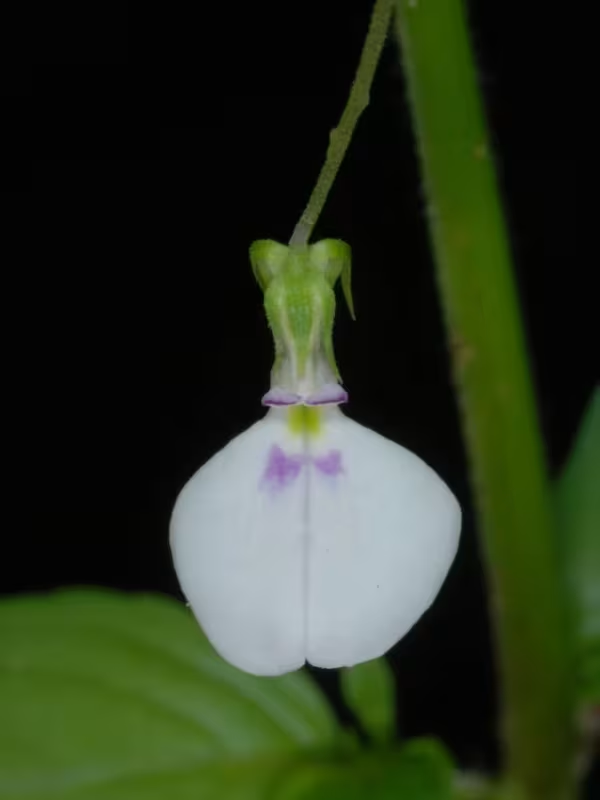
Description
Sowing dates
Pombalia linearifolia is a member of the Violaceae family, recognized for its distinct linear foliage and specific environmental adaptation requirements. It is primarily found in regions that support tropical or subtropical vegetation cycles.
Propagation is typically carried out via seeds, which perform best when sown in a well-aerated, sterile substrate. Surface sowing is generally recommended due to the small size of the seeds and their requirement for light during germination.
The optimal sowing season begins in spring, provided that soil temperatures remain consistently above 20 degrees Celsius. Maintaining high humidity during the first three weeks is essential for successful seedling establishment.
For large-scale cultivation, plug trays are preferred to reduce transplant shock, as the species exhibits slow initial root development and high sensitivity to physical disturbance.
Once seedlings achieve the fourth true leaf stage, they can be acclimated to outdoor conditions or moved to final growing containers, ensuring that they are protected from direct wind exposure.
Growing requirements
The species thrives in well-drained, sandy loam soils that possess a slightly acidic to neutral pH. Avoiding compaction is vital to ensure proper root respiration and moisture distribution.
While the plant is somewhat drought-tolerant once mature, it requires consistent moisture during its active growing phase. Drip irrigation systems are ideal to keep the foliage dry and reduce disease risk.
Exposure to bright, filtered light provides the best conditions for growth. Direct, intense sunlight can lead to leaf scorch, particularly if the plant is grown in containers with limited soil volume.
Fertilization should be handled with care; a low-nitrogen, balanced liquid fertilizer applied monthly during the summer supports healthy plant structure and prevents excessive, weak growth.
Temperature management is crucial, as the plant cannot withstand frost. In climates with cold winters, the crop must be managed as an annual or brought indoors to a greenhouse environment.
Yield
While often cultivated for ornamental or potential botanical research purposes, harvest yield refers primarily to the collection of aerial biomass. Harvesting should be performed during the peak of the growth season.
Biomass production is optimized by regular pruning, which encourages lateral branching and results in a more dense and uniform canopy for potential processing or extraction.
For consistent production, growers typically aim for multiple harvests per season, taking care not to remove more than one-third of the plant's total leaf mass at any single point.
Drying procedures must be conducted in a dark, well-ventilated space to preserve the integrity of the plant's phytochemical constituents and maintain the visual quality of the harvest.
Expected yield metrics are highly dependent on planting density and the frequency of soil nutrient monitoring, with optimal yields observed in high-input protected agriculture environments.
Main diseases and pests
Root rot caused by Phytophthora species is the primary threat in environments with poor drainage. Implementing a strict irrigation schedule is the most effective preventative measure.
Spider mites (Tetranychidae) often infest the plants during periods of low humidity. These pests feed on cell sap, leading to chlorosis and potential premature leaf drop if left unmanaged.
Fungal leaf spot diseases, typically triggered by high humidity and lack of airflow, can degrade the quality of the foliage. Spacing plants adequately is essential for natural ventilation.
Integrated Pest Management (IPM) practices, including the use of neem-based oils or biological controls like predatory mites, are recommended to minimize reliance on synthetic chemical applications.
Regular monitoring for early signs of distress, such as wilting during the daytime despite adequate soil moisture, allows for rapid intervention before localized infections spread throughout the plot.