
Sinai bluegrass
Poa sinaica
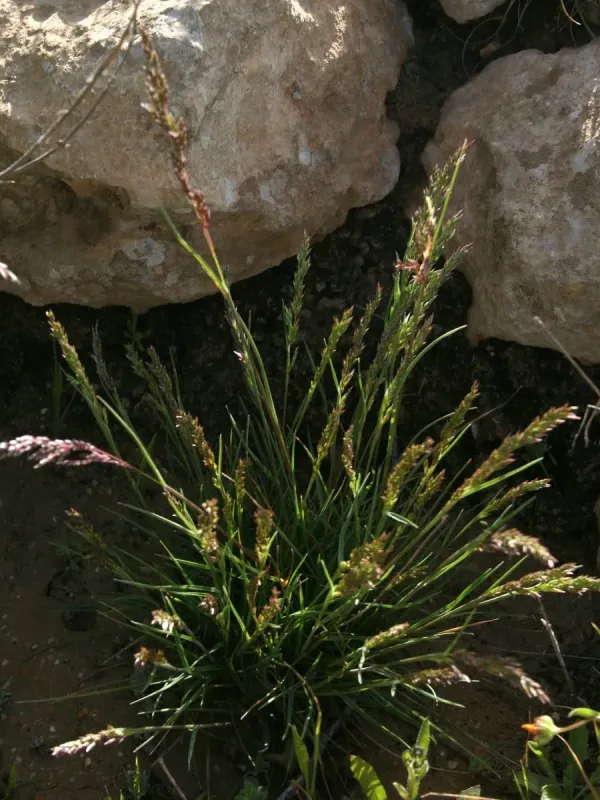
Description
Sowing dates
Sinai bluegrass (Poa sinaica) is a hardy perennial grass species well-adapted to the harsh environments of arid and semi-arid regions. The primary sowing period typically coincides with the onset of the cool, rainy season, which is crucial for successful seed germination in dryland habitats.
When establishing pastures, seeds should be sown at a shallow depth, not exceeding 1–2 centimeters, to ensure that the delicate seedlings can emerge before the soil surface dries out. Proper contact between the seed and the soil is essential for water uptake in these water-limited environments.
The species exhibits a unique biological strategy where it can remain dormant for extended periods. In its native habitat, it relies on timely rainfall and moderate temperatures to complete its lifecycle, making precise timing of sowing critical for agricultural success.
For optimal results, cultivation areas should be selected where natural drainage is good, as excessive moisture stagnation during the dormant phase can negatively impact the health of its bulbous structures. Minimal soil disturbance is recommended to protect these underground organs.
Natural reseeding is a vital part of its management. By allowing the plants to complete their reproductive cycle, the pasture can sustain itself over many years without the need for constant re-sowing, provided that grazing pressure is strictly managed.
Growing requirements
Sinai bluegrass belongs to the Poaceae family. Its most defining characteristic is the formation of small underground bulbs, which allow the plant to survive extreme drought by storing vital nutrients and water while the surface vegetation dies back.
The plant thrives in well-drained sandy or loamy soils. It displays significant salt tolerance, allowing it to grow in alkaline or saline conditions that would be detrimental to many other forage grass species found in similar geographic areas.
As a light-loving species, it requires open, unshaded sites to maximize its photosynthetic activity during the short, productive spring season. It is not suitable for planting under canopy covers or in areas with high weed competition.
Climatic requirements focus on a seasonal regime of cool, moist winters followed by a warm, dry spring. The plant is essentially an ephemeral; it completes its vegetative and reproductive growth before the onset of the harsh summer heat.
Agricultural management must prioritize the protection of its bulbous root system. Intensive tillage is counterproductive and should be avoided to ensure that the underground reserves are not destroyed, which would lead to the irreversible loss of the stand.
Yield
The yield of Sinai bluegrass is heavily dependent on annual precipitation levels. It is not an intensive crop but serves as a vital component of natural forage systems in regions where more demanding agricultural plants cannot survive.
Nutritional value is highest during the active growth phase in late winter and early spring. As the plant enters dormancy, proteins and carbohydrates are translocated into the bulbs, meaning the nutritional quality of the hay or grazed biomass declines significantly.
Regulated grazing is the primary method to maintain long-term productivity. By preventing overgrazing, the plants are able to accumulate sufficient reserves in their bulbs, which directly supports the vigour of the next season's growth cycle.
While biomass yield per hectare is lower compared to irrigated forage, the forage availability during early spring is critical for livestock systems in desert areas. It provides essential nutrition when other food sources are scarce.
Fertilization with small amounts of nitrogen during the early growth stages can help boost foliage production, but this should be balanced carefully to avoid promoting excessive weed competition that could outpace the relatively slow-growing bluegrass.
Main diseases and pests
Overgrazing stands out as the most significant threat to Sinai bluegrass populations. When animals graze too heavily during the bulb-filling stage, the plant loses its ability to recover and store reserves, leading to a rapid decline in population density.
Pathogens such as various rusts and leaf spots can affect the foliage during unusually wet and cool springs. While these can cause localized damage, they rarely threaten the overall survival of the stand due to the plant's short and rapid growing season.
Insects like aphids can occasionally become a nuisance, damaging leaf tissue and reducing photosynthesis. However, these infestations are usually managed by the plant's own resilience and the quick transition of the lifecycle to the dormant state.
Competition from invasive weeds and more vigorous perennial grasses can be a major challenge. Because Sinai bluegrass is small in stature, it can be easily smothered if weeds are not managed during the early stages of the spring season.
Climate change, particularly the unpredictability of winter rains, poses a severe threat. Persistent drought during the winter months prevents the initiation of the growth cycle, leading to long-term population decline and degradation of the grazing land.