
Tussock Grass
Poa labillardieri C. V. Eskdale
Description
Growing requirements
Poa labillardieri, commonly known as the common tussock grass, is a robust perennial belonging to the Poaceae family. Originating from Australia, this species is highly valued for its dense, clumping growth habit and adaptability to various environmental conditions.
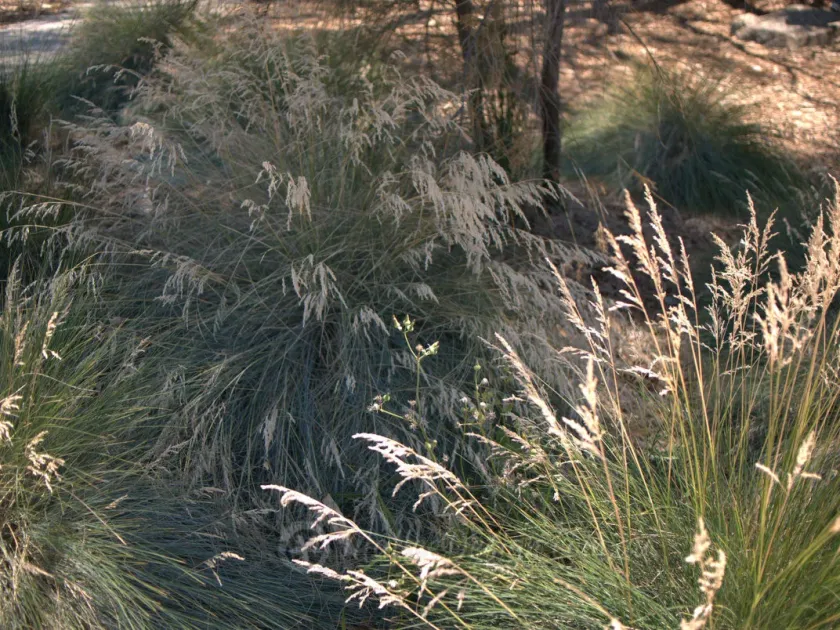
Botanically, the plant features narrow, grey-green leaves that form large, upright tussocks reaching up to 1 meter in height. During the flowering stage, the grass produces elegant, feathery panicles that add significant aesthetic and structural value to the landscape.
This grass thrives in full sun to partial shade and is highly adaptable to a range of soil types, including sandy, loamy, and clay soils. It excels in well-drained locations, although it shows remarkable tolerance for occasional waterlogged conditions.
Regarding climate, the Eskdale variety is known for its resilience against frost and wind, making it an excellent candidate for exposed areas. It requires minimal intervention once established, reflecting its status as a low-maintenance agricultural plant.
Its primary agricultural and ecological uses include soil stabilization, erosion control on slopes, and the provision of habitat for beneficial insects. In some regions, it is used in restoration projects to reclaim degraded land.
Main diseases and pests
Common threats to Poa labillardieri include fungal infections such as rust and leaf spot, which are often triggered by stagnant air or excessive humidity levels. Promoting airflow within the canopy is essential for plant health.
Insect pests, such as larvae of moths or beetles, can occasionally cause damage to the foliage. However, such infestations are usually managed through natural biological control agents found in healthy ecosystems.
Root rot represents a significant threat when soil drainage is poor. To mitigate this risk, it is important to ensure the planting site is properly graded and that water does not pool around the base of the tussocks.
Management practices, such as removing accumulated dead material from the center of the clump every few years, prevent the buildup of pathogens and encourage vigorous new growth during the spring season.
Monitoring the soil for moisture levels helps prevent dehydration during extended droughts and limits the susceptibility of the plant to secondary infestations from opportunistic pests or soil-borne pathogens.