
Plocama reboudiana
Plocama reboudiana
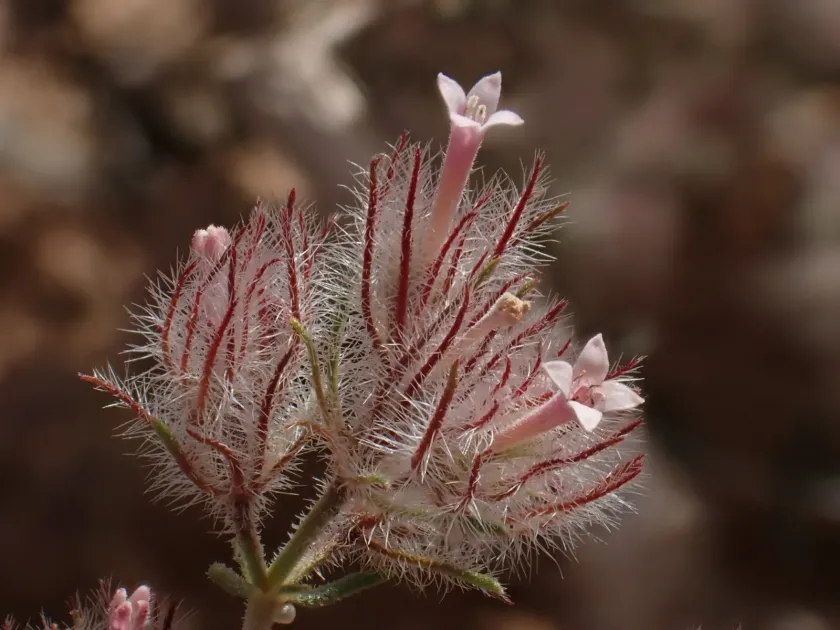
Description
Growing requirements
Plocama reboudiana is a distinct species belonging to the Rubiaceae family. This shrub has evolved to thrive in some of the most arid environments on the planet, making it a subject of interest for sustainable agriculture in desert regions where water resources are severely restricted.
The plant originates from the rugged, arid landscapes of North Africa. Its natural distribution is primarily found in rocky and sandy desert areas, where it has developed specialized mechanisms to cope with extreme aridity, fluctuating temperature profiles, and intense, constant solar radiation.
Regarding soil requirements, the species strictly demands well-drained, porous media. Sandy or gravelly soils with excellent aeration are ideal, as they mimic the natural environment. Waterlogging must be strictly avoided, as the root system is highly susceptible to rot when exposed to stagnant moisture for extended periods.
In terms of climatic adaptability, the plant is a champion of heat tolerance. It thrives in high-temperature zones and requires full sunlight exposure to maintain metabolic efficiency. While it can survive significant daily thermal shifts, establishing the crop in frost-prone areas is generally discouraged due to the risks of vegetative damage.
Agronomic management focuses on monitoring soil salinity levels, as the plant exhibits notable halophytic tendencies. Effective management involves minimal irrigation cycles designed to support initial root establishment without creating anaerobic conditions in the soil profile. Proper spacing is essential to minimize competition for available soil moisture between individual plants.