
Red-stemmed feather moss
Pleurozium schreberi
Description
Growing requirements
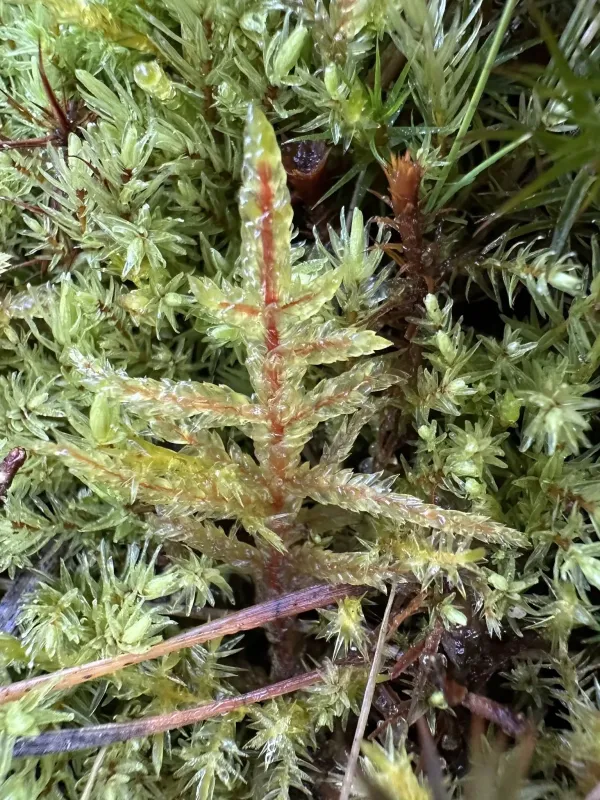
Pleurozium schreberi, commonly known as red-stemmed feather moss, belongs to the Hylocomiaceae family. It is a dominant bryophyte species found in temperate and boreal forests globally.
This moss thrives in moist, acidic environments, typically found on the forest floor beneath coniferous trees such as pine, spruce, and fir, forming extensive carpets.
The plant requires stable humidity levels and indirect light. It plays a critical role in the moisture regulation of the forest floor, protecting seedlings from desiccation.
Its botanical structure includes distinct red stems and feathery, yellowish-green leaves, which allow for efficient water absorption from atmospheric precipitation.
Growth is primarily vegetative, spreading through creeping stems, which allows it to colonize large surface areas efficiently under suitable environmental conditions.
Yield
While not a conventional agricultural crop, Pleurozium schreberi holds economic value in the horticultural industry for landscaping, terrarium construction, and floristry.
It provides significant ecological yields by fixing atmospheric nitrogen through symbioses with cyanobacteria, thereby enriching the soil nutrient cycle.
Sustainable harvesting of the moss is practiced in some regions, though it must be managed carefully to avoid damaging the underlying soil horizon.
The biomass of this species serves as a valuable natural resource for soil stabilization and moisture retention in reforestation projects.
Research continues into the potential use of moss-derived extracts in environmental monitoring and organic land management practices.