
Platycapnos spicatus
Platycapnos spicatus
Description
Growing requirements
Platycapnos spicatus is an annual herbaceous plant belonging to the Papaveraceae family. Known for its spike-like inflorescences, this plant is primarily recognized as a field weed that thrives in agricultural environments across the Mediterranean region and parts of North Africa.
The species prefers well-drained, nutrient-rich soils with a neutral or alkaline pH. It is commonly found in cereal crops and pulse fields where tillage practices disturb the soil surface, allowing the seeds to germinate rapidly during the mild, damp spring conditions characteristic of its native range.
Regarding climatic requirements, the plant is highly adapted to temperate zones with distinct wet and dry seasons. It typically completes its life cycle before the onset of extreme summer heat, ensuring that seed production is achieved while soil moisture is still sufficient for physiological development.
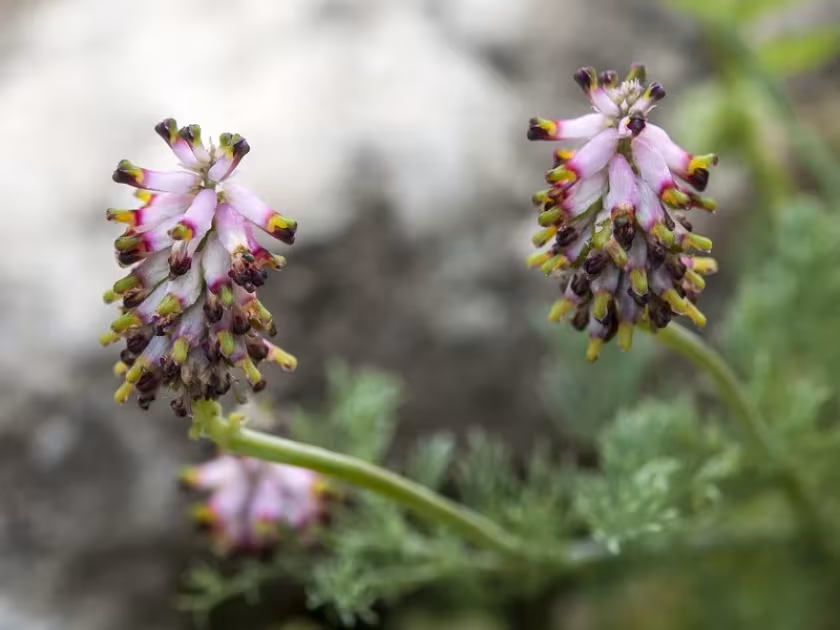
Botanical identification is based on its pinnately divided, glaucous leaves and dense racemes of small pink flowers. Its compact structure allows it to establish quickly in open spaces, where it competes effectively for sunlight against germinating crop seedlings during the early vegetation phase.
Effective management in professional agronomy involves a combination of mechanical weeding and the use of selective herbicides if the infestation level reaches the economic threshold. Understanding its seed dormancy and germination timing is crucial for preventing significant yield loss in intensive cultivation systems.
Main diseases and pests
The primary agricultural threat posed by Platycapnos spicatus is its role as a crop competitor. By sequestering essential nutrients and moisture, it can cause stunted growth in sensitive cereals, ultimately leading to reduced grain quality and lower overall crop yields at harvest time.
In terms of plant health, it serves as a host for various aphids that transmit viral diseases to economic crops. Additionally, during humid seasons, the plant may suffer from foliar fungal infections, making it an unintentional source of inoculum that can spread throughout the agricultural field.