
Plantago leiopetala
Plantago leiopetala
Description
Growing requirements
Plantago leiopetala is a specialized plant species within the Plantaginaceae family. It is geographically restricted to the Macaronesian islands, where it has evolved to adapt to specific oceanic climate conditions.
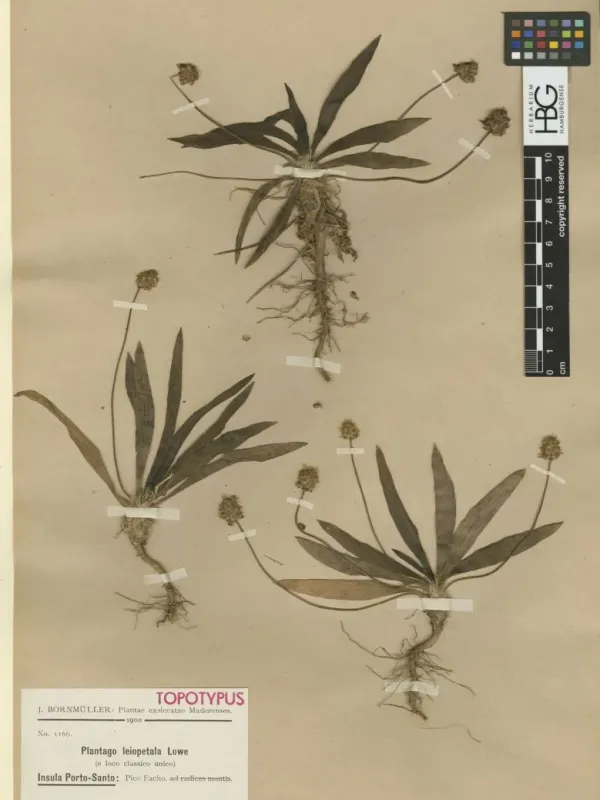
The plant demonstrates a compact growth habit, characterized by succulent-like leaves arranged in a basal rosette, which allows it to thrive in nutrient-poor volcanic soils.
Cultivation requires a well-draining soil medium with a slightly acidic pH. The addition of perlite or coarse sand is recommended to ensure optimal root aeration and to prevent the risk of waterlogging.
It prefers mild temperate conditions. Consistent sunlight is necessary for flower development, though the plant can tolerate partial shade if the environmental temperature remains moderate.
Regarding moisture management, it is essential to follow a regime that allows the top layer of the soil to dry out slightly between waterings, mimicking the natural precipitation cycles of its native habitat.
Main diseases and pests
Fungal pathogens, particularly those belonging to the genus Phytophthora, are the primary threat to the crop. These pathogens target the root system, often leading to rapid wilting if soil drainage is compromised.
Aphid infestations are common during the spring growth flush. These pests congregate on the underside of leaves, extracting plant sap and potentially transmitting viral diseases.
Leaf spot diseases, caused by various species of Alternaria, can affect the aesthetic and medicinal quality of the leaves. Sanitation measures such as removing infected debris are critical.
To mitigate these risks, crop rotation is highly recommended. Avoid planting in fields previously occupied by other Plantaginaceae species to prevent the buildup of soil-borne pathogens.
Implementing a strict hygiene protocol, including sterilized tools and certified pathogen-free planting material, significantly reduces the probability of a pest or disease outbreak.