
Sea plantain
Plantago decipiens
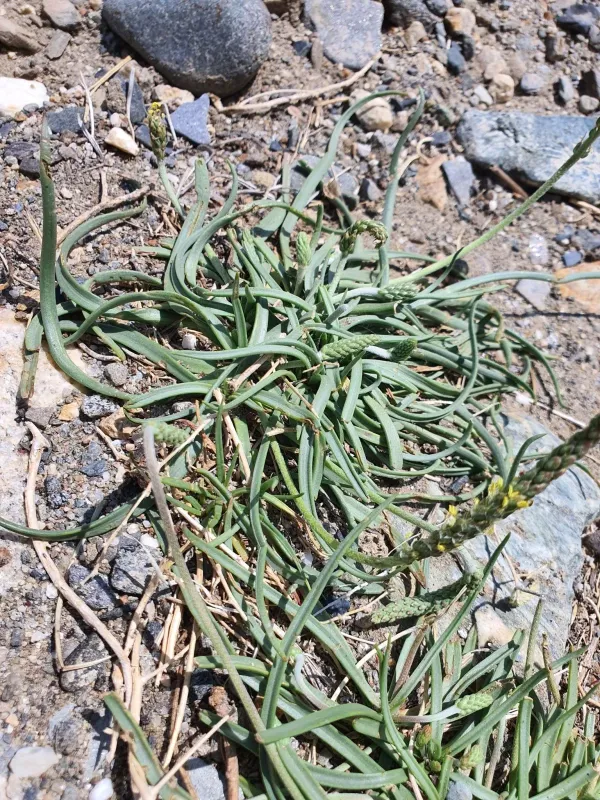
Description
Sowing dates
Sea plantain (Plantago decipiens) is a halophytic species belonging to the Plantaginaceae family. This culture is uniquely adapted to saline coastal environments, which dictates its specific sowing requirements.
Sowing should ideally take place in early spring, once the soil has warmed sufficiently. The seeds exhibit high germination rates when sown at a shallow depth, usually no more than 0.5 to 1 cm deep.
Maintaining consistent moisture in the topsoil is crucial during the initial two-week germination period to ensure uniform establishment across the field.
The planting pattern should account for the plant's rosettes; a spacing of approximately 35-40 cm between rows is recommended to allow for optimal leaf development and airflow.
When establishing a plantation, producers should note that the species has high self-seeding potential, requiring careful management to control density in future growing cycles.
Growing requirements
As a halophyte, sea plantain requires specific environmental conditions to thrive. It performs best in well-drained, moist soils that have a moderate level of salinity.
The plant demonstrates remarkable resilience to environmental stress, including strong winds and significant temperature fluctuations, typical of maritime climates.
High levels of solar radiation are necessary for healthy growth. Adequate sunlight exposure is critical for the biosynthesis of the secondary metabolites that make the plant valuable.
While the plant is relatively tolerant to varying soil fertility levels, the presence of specific minerals and salts enhances its chemical composition and medicinal potency.
Proper drainage is the most vital requirement, as stagnant water can lead to root rot and severely compromise the yield, even if the species is naturally water-tolerant.
Yield
The primary agricultural output of sea plantain is its aerial biomass, which is harvested for its therapeutic and culinary properties.
Yields typically increase over the first three years of growth, provided the plantation receives proper care and is harvested during peak physiological activity.
The perennial nature of the plant allows for multiple harvests per season if the cutting process is carried out with precision, leaving the central growing point intact.
Optimal harvest timing is during the early flowering phase, as this is when the concentration of bioactive compounds in the leaves reaches its maximum.
Mechanized harvesting is possible with calibrated equipment, but manual or semi-automated methods are often preferred to ensure high-quality, unblemished raw material.
Main diseases and pests
The main threats to sea plantain crops include fungal diseases such as powdery mildew, which are often exacerbated by poor air circulation or excessive field moisture.
Pests such as leaf-eating insects can pose a significant challenge, especially when they target the young, tender leaves in the center of the rosette.
Prevention is the best defense; maintaining adequate spacing and removing infected plant matter helps minimize the spread of diseases within the crop.
Chemical intervention should be avoided to maintain the organic and medicinal integrity of the harvest, making biological control methods the preferred choice for growers.
Regular field scouting is essential to identify and address pest outbreaks early, protecting the biomass from irreversible damage throughout the growing season.
Harvesting
Harvesting should be conducted on dry, sunny days to ensure the biomass is free from dew or residual moisture, which would otherwise lead to spoilage.
Once harvested, the plant material must be processed quickly; it is highly susceptible to heat and will lose quality rapidly if allowed to sit in piles.
Drying is best accomplished in shaded, well-ventilated areas or specialized industrial dryers at temperatures below 45 degrees Celsius to preserve volatile compounds.
Post-drying, the material undergoes sorting and cleaning to remove any debris or discolored leaves, ensuring the final product meets high commercial standards.
Storage should be in cool, dry, and well-ventilated environments, using breathable packaging to ensure the longevity of the herb's chemical efficacy.