
Plantago albicans
Plantago albicans
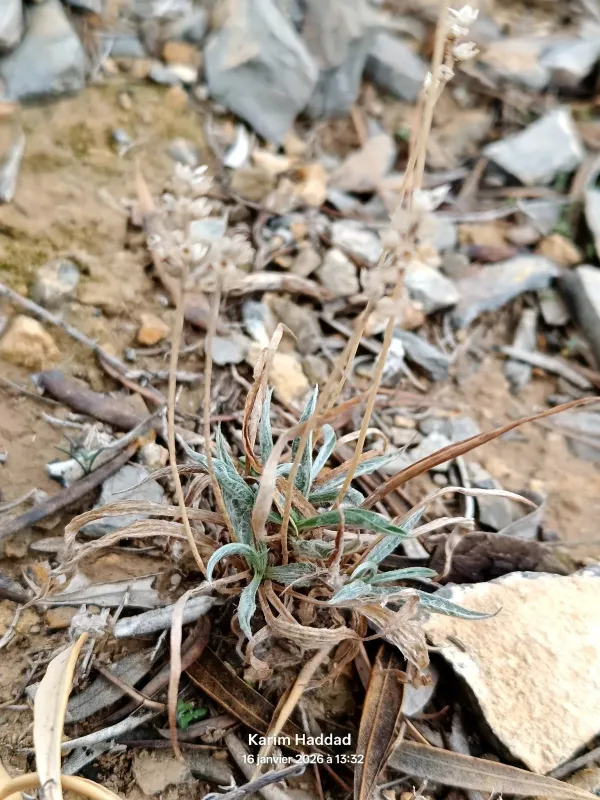
Description
Growing requirements
Plantago albicans is a perennial herb belonging to the Plantaginaceae family, specifically adapted to arid and semi-arid environments. It is a highly resilient species known for its ecological plasticity.
The plant is easily identified by its distinctive white, woolly indumentum covering the leaves and stems. This physical trait is an evolutionary adaptation that reflects sunlight and reduces water loss.
The species originates from the Mediterranean region, North Africa, and the Middle East. It thrives in poor, sandy, and sometimes saline soils where other vegetation might struggle to establish.
Optimal growth requires high light intensity and long periods of heat. Adequate soil drainage is critical; the plant is highly susceptible to root damage if the growing medium remains waterlogged for extended periods.
Agricultural use is primarily focused on sustainable land management, desertification control, and providing forage for small ruminants in regions where feed resources are limited.
Main diseases and pests
Fungal diseases represent a significant threat to Plantago albicans, especially when atmospheric humidity levels exceed the plant's tolerance range, potentially leading to leaf spots or root rot.
Insect pests such as cutworms and various coleopteran larvae can cause damage to the root system and foliage, necessitating careful monitoring during the early stages of plant growth.
Competition from fast-growing weeds is a primary challenge, as Plantago albicans exhibits slow initial development, requiring consistent weeding to ensure survival and productivity.
Root-knot nematodes can severely affect plant health, reducing nutrient uptake and overall vigor in infested soils, which underlines the importance of soil management.
Integrated Pest Management (IPM) practices, emphasizing proper irrigation cycles and the removal of host plants for pests, are essential to maintaining healthy stands of this species.