
Akk Plantain
Plantago akkensis
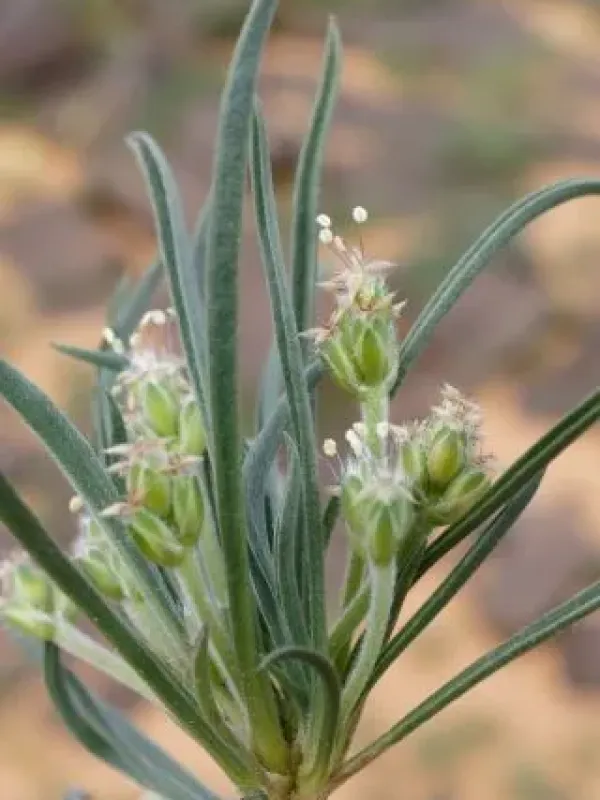
Description
Sowing dates
Akk Plantain (Plantago akkensis) belongs to the Plantaginaceae family. This specific species is adapted to arid conditions, so sowing is performed in early spring as soon as the soil warms up to 8–10 degrees Celsius.
The seeds of this crop have high density, so it is recommended to stratify them for 2–3 weeks before sowing to increase the germination rate. The optimal planting depth is no more than 0.5–1 centimeter, as small seeds require shallow placement.
The sowing pattern should ensure free development of the basal rosette of leaves. It is recommended to use a wide-row method with row spacings of up to 45 centimeters, which facilitates plantation maintenance and weed control.
Akk Plantain seedlings emerge quite slowly, making them highly vulnerable during the first month. During this period, it is critical to protect young plants from the drying of the topsoil and competition from weeds.
For industrial-scale production, it is preferable to use high-quality seed material with high germination energy, cleaned of mechanical impurities.
Growing requirements
The crop prefers open, well-lit areas with light-textured soils. Best growth indicators are observed in sandy and loamy soils, which provide excellent aeration and do not retain excess moisture.
The plant has pronounced xerophytic adaptation, yet to obtain a marketable yield of green mass, it requires moderate irrigation during the active vegetative growth phase. Excessive soil moisture can lead to the development of root rots.
The optimal pH range for Akk Plantain cultivation is 6.0–7.5. In strongly acidic soils, the plant exhibits slowed metabolism and low productivity, so liming of the area is recommended.
A key requirement is adherence to crop rotation. It is not recommended to plant this crop after members of the same family or after perennial grasses prone to harboring common soil pathogens.
Akk Plantain responds well to moderate doses of phosphorus-potassium fertilizers, which strengthen cell walls and increase the plant's resistance to unfavorable climatic factors.
Yield
The yield of Akk Plantain directly depends on the planting density per unit area and the level of agronomy. Following all recommendations, one can achieve stable indicators of marketable raw material collection.
In the first year, yields are usually lower as the plant invests its primary resources in root system development. Peak productivity of green mass is observed in the second and third years of vegetation.
The collection of raw materials is carried out in the full flowering phase, when the concentration of biologically active substances in the leaves peaks. This period determines the ultimate quality of the medicinal material.
The average dry mass yield per hectare under intensive cultivation can reach up to 1.5–2.0 tons, depending on regional climatic conditions and irrigation frequency.
To maintain high plantation productivity, it is recommended to apply regular fertilizers after each harvesting cycle to stimulate the rapid regrowth of new green mass.
Main diseases and pests
The main threats to Akk Plantain plantings are fungal diseases that develop in high humidity and poor ventilation. Powdery mildew and various leaf spots are the most dangerous.
Among pests, phytophages that feed on the juicy leaves, such as slugs, snails, and certain leaf beetles, cause the most damage. During hot periods, plantings may suffer from spider mite infestations.
To prevent the spread of infections, it is critical to maintain spatial isolation between fields of different ages and avoid overcrowding of plantings, which worsens air circulation.
Chemical control should be applied strictly according to regulations for medicinal crops, as residual pesticide accumulation in the raw material is unacceptable.
Biological control methods, including the use of entomophages or bio-preparations based on antagonistic fungi, show high efficiency in integrated protection systems for this crop.
Harvesting
Harvesting of Akk Plantain is carried out mechanically or manually depending on the planting size. The optimal time for collection is dry, sunny weather after the dew has evaporated.
The leaves are cut at a specific height, leaving part of the petiole to avoid damaging the central growing point, which allows the plant to recover faster for subsequent harvests.
The harvested mass must be immediately sent for primary processing or drying. It is strictly forbidden to leave freshly cut leaves in piles, as this leads to rapid overheating and loss of quality.
Drying is performed in specialized dryers at temperatures no higher than 45–50 degrees Celsius, allowing the preservation of the natural color of the leaves and the maximum amount of beneficial compounds.
After drying, the raw material undergoes a cleaning stage to remove mechanical impurities and is sorted by fraction, after which it is packed in airtight containers for long-term storage in a dry, dark place.