
Silkgrass
Pityopsis graminifolia
Description
Growing requirements
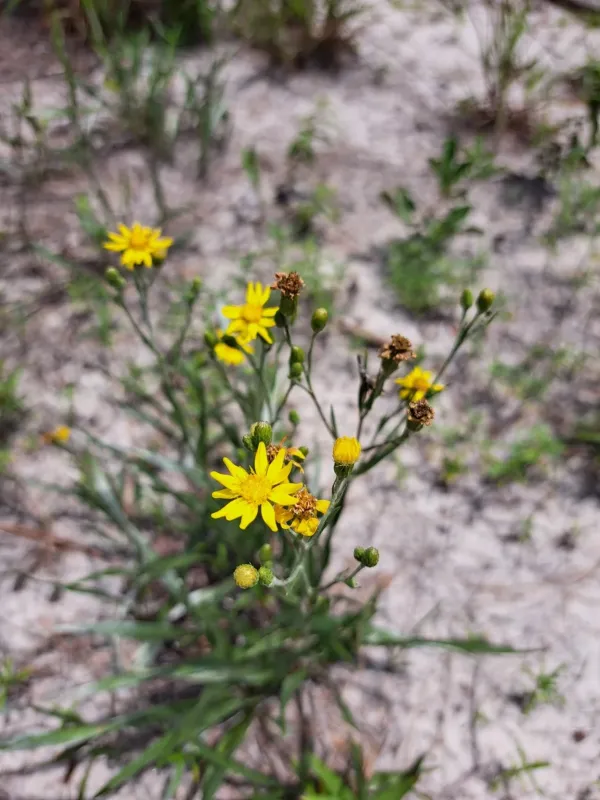
Silkgrass (Pityopsis graminifolia) is a perennial herbaceous plant belonging to the Asteraceae family. Native to the southeastern United States, this species is highly valued for its striking silvery, grass-like foliage that provides texture to various landscape environments.
The plant thrives in full sun, which is essential for maintaining its silvery coloration and compact habit. In shade or low-light conditions, the plant tends to become leggy and loses its distinct aesthetic appeal, making site selection critical for cultivation success.
It prefers well-drained, sandy, or rocky soils, mimicking its natural habitat in dry pine forests and savannas. The soil should be slightly acidic to neutral, with low organic matter content, as high-nutrient soils can cause overly rapid growth and reduced structural integrity.
Water requirements are relatively low once the plant is established, as it possesses high drought tolerance. Irrigation should be applied deeply but infrequently, ensuring that the soil dries out completely between watering sessions to prevent root saturation.
Temperature range tolerance is broad, with the plant performing well in warm temperate climates. It exhibits high heat tolerance during summer months but requires protection from winter waterlogging, which is the primary cause of plant failure in cooler zones.
Main diseases and pests
The primary threat to Pityopsis graminifolia is root rot, caused by poorly drained soils and excessive moisture. This disease is particularly prevalent during the dormant season, necessitating strict control of irrigation and landscape grading to ensure runoff.
Fungal leaf spots can occur when humidity levels remain high and air circulation is restricted. Pruning back spent foliage in late winter or early spring helps promote healthy air movement and reduces the buildup of pathogens within the center of the plant.
Insect pests such as aphids and spider mites may occasionally infest the plant, especially during periods of drought-induced stress. Early detection through regular monitoring is key to managing populations before they impact plant health significantly.
Slugs and snails can cause damage to the tender base of the plant, particularly in spring. Application of appropriate baits or creating barriers can help protect new growth, ensuring that the plant establishes itself effectively during the initial growing season.
General plant health can be maintained by avoiding unnecessary fertilization, as silkgrass is well-adapted to nutrient-poor soils. Over-fertilization can result in weakened cell walls, making the plant more susceptible to opportunistic diseases and insect attacks.