
Water cabbage
Pistia stratiotes L.
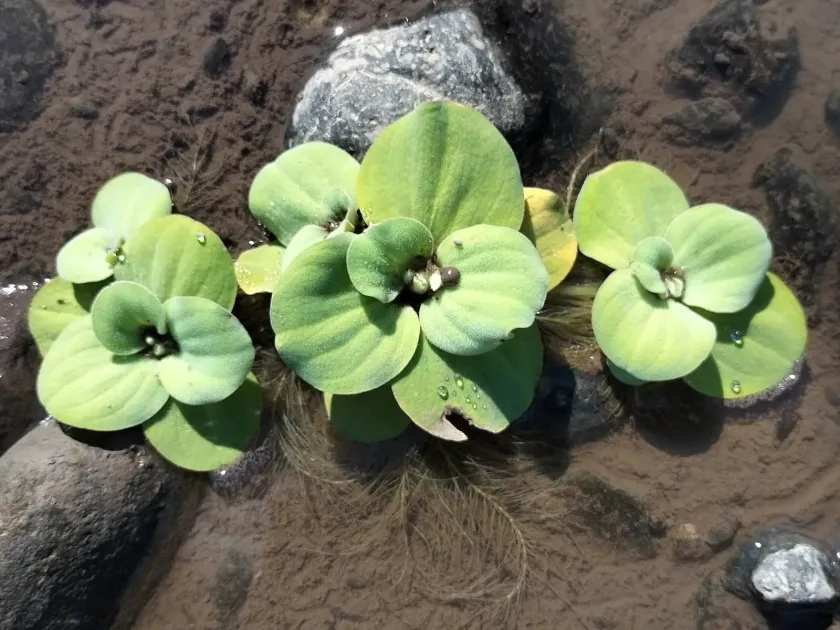
Description
Sowing dates
Pistia stratiotes, commonly known as water lettuce or water cabbage, reproduces primarily through vegetative propagation. It produces stolons that grow outward, leading to the formation of new daughter rosettes.
Propagation is most efficient during the warm season when temperatures are consistently above 22°C. In controlled environments like greenhouses, vegetative growth can continue throughout the year if lighting and nutrition are adequate.
Once a daughter plant develops its own roots and reaches a significant size, it can be separated from the mother plant. This accelerates the colonization of the available water surface area.
High light intensity is crucial for the successful multiplication of new rosettes. In professional aquatic farming, maintaining optimal spacing between plants is essential to prevent overcrowding, which can stunt the growth of individual rosettes.
Water movement should be minimized during the active growth phase, as strong currents can damage the stolons and interrupt the development of the new vegetative structures.
Growing requirements
Belonging to the Araceae family, this species thrives in tropical and subtropical regions. It requires abundant, bright, and indirect light for at least 10–12 hours per day to maintain healthy leaf morphology.
The ideal water temperature for Pistia ranges between 22°C and 28°C. It is highly sensitive to frost; exposure to near-freezing temperatures causes the leaves to collapse and the plant to perish rapidly.
Water quality requirements include a rich nutrient profile, specifically high nitrogen and phosphorus levels, which the plant utilizes for rapid expansion. It acts as an effective phytoremediation tool for improving water quality.
High relative humidity is beneficial for the foliage, although good air circulation over the water surface is required to prevent fungal growth caused by stagnant air and trapped moisture on the leaves.
The substrate or rooting medium is not required since it is a floating aquatic plant; however, the water chemistry must be free from high salt concentrations or harsh agricultural chemicals that could inhibit development.
Yield
Pistia is recognized for its extraordinary biomass production rates. Under optimal conditions, a population can double its biomass in less than a week, making it a high-yield aquatic crop.
The harvested biomass serves as a valuable organic fertilizer, especially in permaculture systems. It is rich in nitrogen and organic carbon, which significantly improves soil structure when composted.
In aquaculture, the plant is used to remove excess nutrients from farm runoff, providing a sustainable solution to nitrogen management while simultaneously producing harvestable plant matter.
Recent studies highlight its potential in bioenergy, specifically for anaerobic digestion to produce biogas, leveraging its high content of rapidly biodegradable organic compounds.
Production efficiency can be enhanced in industrial settings by using supplemental CO2 and precisely balancing the nutrient intake in the water to reach maximum biomass capacity without reaching a state of eutrophication.
Main diseases and pests
Aphids and spider mites are the most common pests, particularly when plants are grown in greenhouse conditions with lower humidity. These pests infest the upper leaf surface, causing chlorosis and deformation.
Fungal infections, such as root rot, occur when water quality degrades or air circulation is insufficient. This disease manifests as darkening and softening of the roots, eventually leading to plant collapse.
Competitive algae blooms can stifle Pistia development by consuming nutrients and oxygen, forcing the plant to compete for resources, which reduces its overall growth rate and vigor.
Heavy metal accumulation, while beneficial for water cleanup, can lead to tissue toxicity if concentration levels exceed the plant’s adaptive physiological threshold, causing localized necrosis.
Management of these threats is best achieved through integrated pest management (IPM), avoiding toxic pesticides that would contaminate the water body, and focusing on optimal environmental stability.
Harvesting
Harvesting is typically performed using mechanical surface skimmers or nets that effectively gather floating rosettes while maintaining the structural integrity of the water body.
The best time for harvesting is during the peak growth phase, ensuring the material is young and succulent, which maximizes the nutrient content for subsequent use in composting or animal feed.
Post-harvest processing involves removing excess water through pressing, which reduces transport costs and prepares the material for dehydration or immediate processing in reactors.
When intended for animal fodder, harvesting must be followed by proper thermal or chemical treatment to reduce oxalate levels, which is a common trait among members of the Araceae family.
Regular maintenance harvesting is mandatory in many regions to prevent the plant from becoming an invasive species, as it can quickly obstruct water flow and navigation in uncontrolled natural systems.