
Pinckneya bracteata
Pinckneya bracteata
Description
Growing requirements
Pinckneya bracteata, commonly known as Georgia bark or fever bark, is an intriguing ornamental shrub or small tree belonging to the Rubiaceae family. Native to the southeastern United States, it thrives in wetland-like habitats and acidic soils.
The plant requires a moist, well-draining soil environment with an acidic pH level. It is highly sensitive to drought and needs a consistent supply of water throughout the growing season to maintain its foliage and overall health.
Climatically, it prefers warm, humid environments. As it lacks significant frost hardiness, cultivation is generally restricted to mild temperate and subtropical zones where protective measures can be taken during unusually cold snaps.
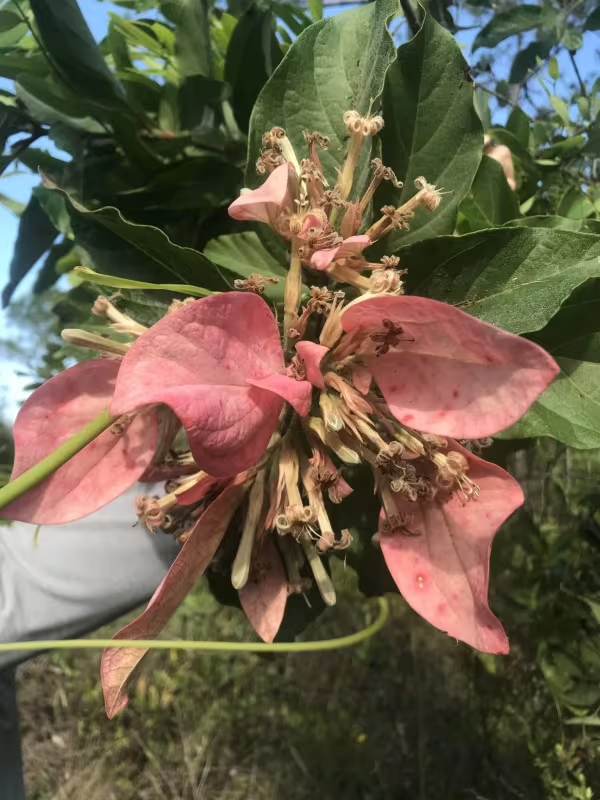
The plant is best known for its botanical marvel: the showy, rose-colored bracts that surround the small, tubular flowers. These bracts persist for a long duration, making the shrub a prized botanical specimen in specialized botanical gardens.
In landscaping, it serves as an excellent feature plant for bog gardens or pond-side settings. Its aesthetic appeal is at its peak during the mid-summer blooming period when the colorful bracts are fully developed.
Main diseases and pests
Disease management for Pinckneya bracteata is primarily focused on preventing fungal infections such as leaf spots, which thrive in high-humidity conditions without sufficient air movement.
Common pests include aphids, whiteflies, and various types of scale insects that may colonize the young twigs, potentially leading to stunted growth or decreased vigor of the shrub.
Nutrient deficiencies often manifest as chlorosis when the soil pH is not maintained within the acidic range. Ensuring proper soil preparation is essential to prevent these physiological disorders.
Cultural control involves systematic pruning to remove dead or diseased branches, which significantly improves air circulation and reduces the likelihood of pathogen development within the canopy.
Regular monitoring of the underside of the leaves is advised during the peak growing season to detect early signs of pest infestation and apply targeted, eco-friendly treatments.