
Picrodendron arboreum
Picrodendron arboreum
Description
Growing requirements
Picrodendron arboreum is a distinctive tree species belonging to the family Picrodendraceae. It is native to the Caribbean region, with significant populations found on islands such as Jamaica, Cuba, and Hispaniola, where it thrives in specific local microclimates.
The plant demonstrates a high adaptation to tropical environments characterized by distinct wet and dry seasons. It predominantly requires well-draining, calcareous soil types, as the roots are highly sensitive to waterlogged conditions that can inhibit its growth.
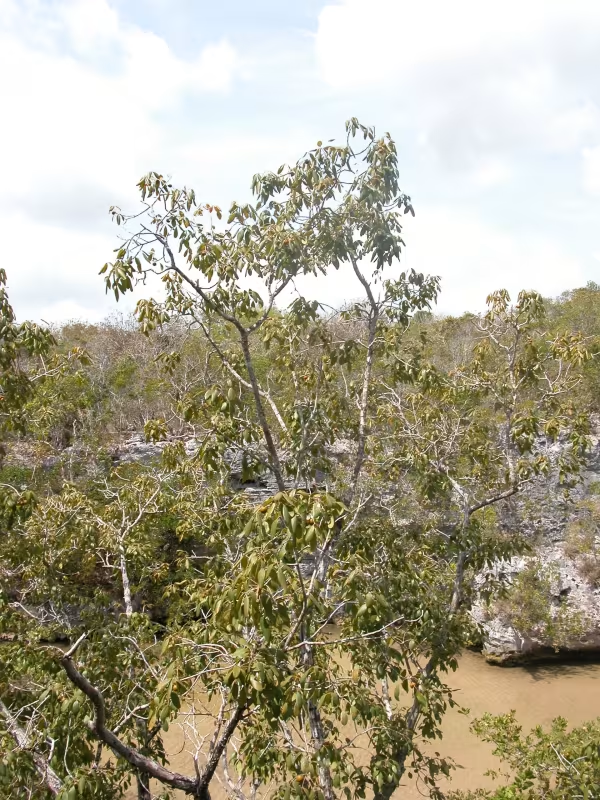
Botanically, this species is noted for its sturdy structure and evergreen foliage. Its leaves are typically thick and leathery, an evolutionary trait that enables the tree to minimize water loss under the intense heat of its native habitat.
Economically, the tree is primarily valued for its exceptionally hard and durable wood, which has been utilized locally for various construction and tool-making purposes. Research into the phytochemical properties of its fruits and leaves remains a niche but ongoing field.
Due to its specialized habitat requirements and slow growth rate, the species is not cultivated as a conventional agricultural crop. Modern management focuses on conservation efforts to protect existing wild populations from the threats of deforestation and land-use change.