
Phymatolithon calcareum
Phymatolithon calcareum
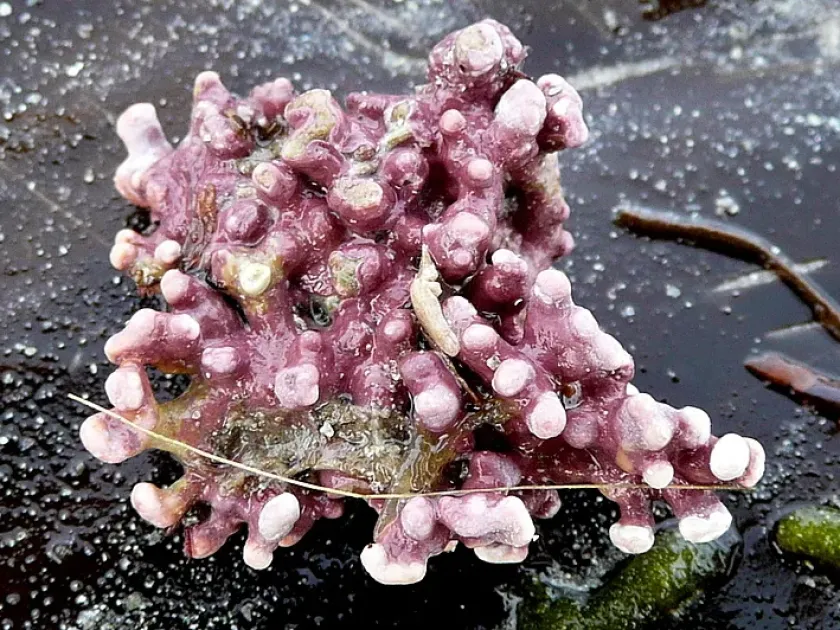
Description
Growing requirements
Phymatolithon calcareum belongs to the Hapalidiaceae family and is a red seaweed species commonly referred to as 'maerl'. It plays a significant role in creating unique marine habitats on the seabed of the Atlantic coast.
This species requires pristine marine environments with high water quality and moderate sunlight exposure. It thrives in areas with strong tidal currents, which prevent sediment accumulation and ensure the absorption of necessary nutrients and dissolved minerals.
Biologically, this seaweed builds a hard skeleton composed of calcium carbonate and magnesium. This slow-growing organism acts as a carbon sink and a biological mineral deposit, which is highly valued in the global agricultural industry.
The agronomic profile of this culture is defined by its ability to serve as an efficient soil conditioner. It helps adjust soil acidity while providing essential trace elements like iron, manganese, and boron that are often lacking in intensive farming systems.
Given its slow growth rate, the conservation status of Phymatolithon calcareum is a priority. Harvesting operations are strictly managed by environmental agencies to ensure that these natural mineral beds are not depleted beyond repair.
Harvesting
Harvesting involves the extraction of maerl deposits using dredging techniques. Modern vessels are equipped with technology to gather the material while reducing the impact on the surrounding biodiversity of the seabed.
Post-harvest processing involves washing the seaweed to remove sand, shells, and silt. The material is then dried to stabilize its moisture content, preserving the integrity of the mineral structure for agricultural applications.
The material is typically milled into specific grades, ranging from fine dust for rapid soil application to coarser granules used in mineral supplements for livestock feed production.
In soil management, the application of this seaweed product is preferred in organic farming. Its neutral to alkaline reaction makes it a safe, slow-acting amendment that improves soil structure and nutrient uptake.
As a feed additive, it serves as a high-quality source of bioavailable calcium. It is widely used for poultry to improve eggshell quality and for livestock to support general skeletal health during high-production stages.