
Needle-leaved Phymaspermum
Phymaspermum acerosum
Description
Growing requirements
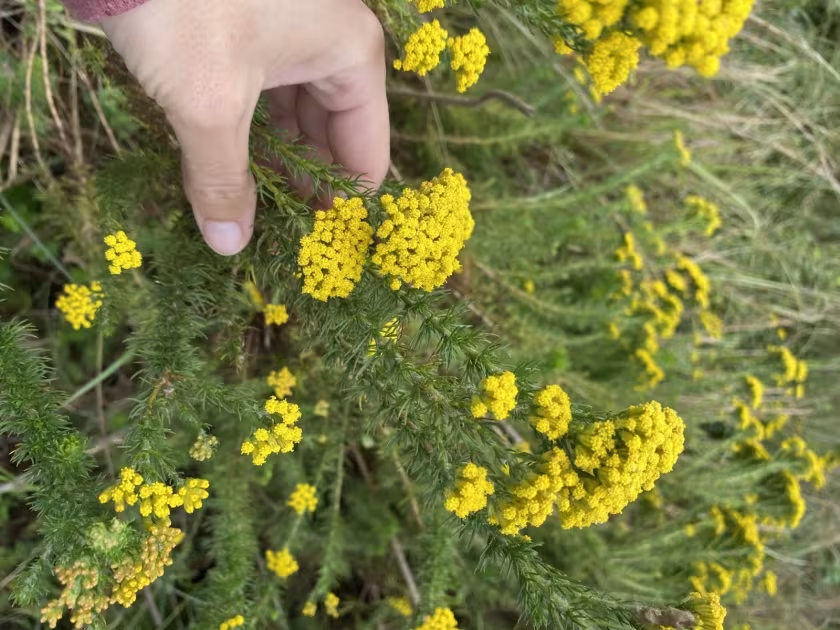
Phymaspermum acerosum, commonly known as the needle-leaved phymaspermum, is a resilient perennial shrub belonging to the Asteraceae family. It is recognized for its unique, fine-textured foliage and its capacity to thrive in harsh environments.
The plant originates from Southern Africa, where it has evolved to occupy arid and rocky habitats. Its native range implies an evolutionary adaptation to environments where nutrients are scarce and water availability is highly inconsistent throughout the year.
Agricultural success with this species relies heavily on mimicking its natural habitat. It demands full sun exposure to maintain its dense, compact growth habit. Failure to provide adequate light often results in weak, spindly stems and reduced flowering potential.
Soil requirements are centered on excellent drainage. Phymaspermum acerosum is highly susceptible to root rot if placed in damp or poorly aerated soils. Sandy or rocky soil compositions are ideal for ensuring proper root health and preventing moisture-related decay.
While the species is notably drought-tolerant, it requires a careful balance regarding temperature. It is sensitive to extreme frosts, making it best suited for climates that mirror its warm native origins, where humidity remains low during the dormant months.