
Phelypaea coccinea
Phelypaea coccinea
Description
Growing requirements
Phelypaea coccinea is a distinct perennial parasitic plant belonging to the Orobanchaceae family. Unlike conventional crops, it lacks chlorophyll and cannot perform photosynthesis; instead, it relies entirely on its host plants, drawing nutrients and water through specialized structures known as haustoria.
The native distribution area of this species primarily covers the mountainous regions of the Caucasus, Turkey, and parts of the Middle East. It thrives in arid to semi-arid mountain slopes and rocky terrains where its specific host plants, typically members of the Asteraceae family, are found.
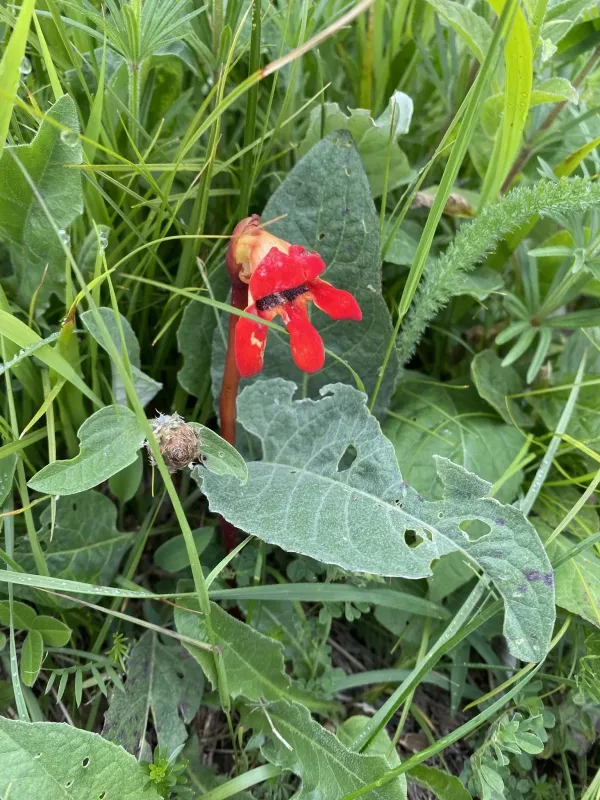
Botanically, Phelypaea coccinea is characterized by its succulent-like, scale-covered stems and striking, vivid red tubular flowers. The plant spends most of its life cycle underground, emerging above the surface primarily to facilitate pollination and seed dispersal during its short flowering phase.
Environmental requirements are strictly tied to the presence of host species and specific soil conditions. The plant demands well-drained, porous soils that prevent root rot, reflecting its natural adaptation to rocky mountain screes and alpine conditions where water does not stagnate.
There is no standard agricultural practice for cultivating Phelypaea coccinea because it is an obligate parasite that cannot be grown in isolation. Its primary value lies in its ecological contribution to mountain biodiversity and its importance in botanical research concerning host-parasite interactions.