
Canary grass
Phalaris coerulescens
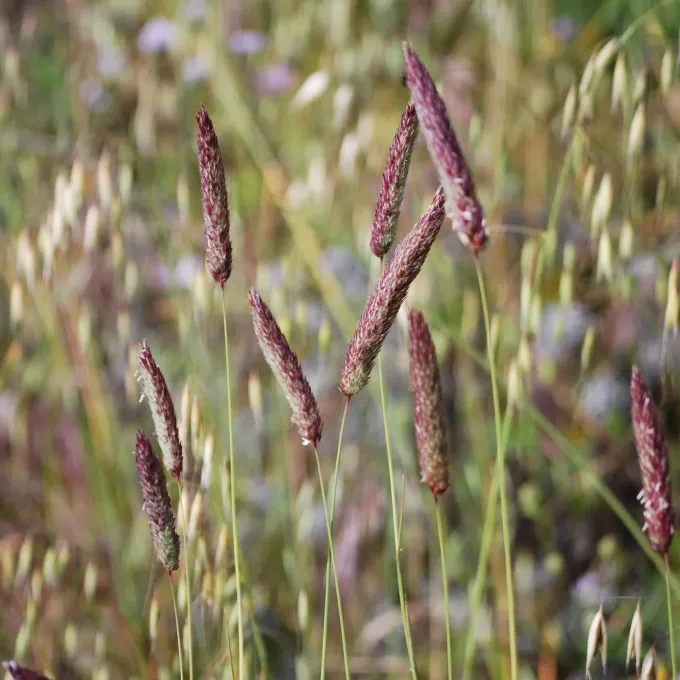
Description
Sowing dates
Canary grass (Phalaris coerulescens) is a perennial cool-season grass typically sown in autumn or early spring. The seeds are small, requiring a shallow sowing depth of 1 to 2 centimeters to ensure successful germination and seedling emergence.
In regions with mild winters, autumn sowing is highly recommended to allow the plant to establish a robust root system before the onset of summer heat. Spring sowing should be completed as soon as the soil can be worked to take advantage of remaining moisture.
The seeding rate varies based on the purity and viability of the seed, but usually falls between 8 and 12 kilograms per hectare. Firming the soil with a roller after sowing is essential to ensure good soil-to-seed contact, which is vital for moisture uptake.
The species exhibits slow initial growth, making weed management critical during the first few weeks after emergence. Producers often use selective herbicides or mowing to control competitive weeds until the canary grass becomes well established.
Maintaining an optimal plant density is crucial for long-term productivity. Proper stand establishment helps prevent soil erosion and limits the potential for weed colonization in the inter-row spaces during the lifespan of the crop.
Growing requirements
Phalaris coerulescens belongs to the Poaceae family and is native to the Mediterranean region, which dictates its preference for temperate climates. It is highly valued for its exceptional drought tolerance and ability to persist under varying climatic conditions.
The grass performs best on deep, well-drained loamy soils with a pH ranging from neutral to slightly acidic. While it can tolerate short periods of waterlogging, it performs best in soils with good aeration and balanced moisture retention.
Temperature requirements for optimal vegetative growth range from 15 to 25 degrees Celsius. The crop exhibits moderate cold tolerance, allowing it to remain productive in areas where winters are not extremely severe or prolonged.
Nitrogen fertilization is a key management practice to stimulate biomass production, especially following the initial establishment phase and after each grazing or cutting. Phosphorus and potassium levels should be balanced during soil preparation to support long-term vigor.
Site selection should involve clear land preparation, including the removal of deep-rooted weeds and proper soil leveling. These preparatory steps ensure a uniform stand and maximize the efficiency of subsequent field operations throughout the years of the crop's lifecycle.
Yield
The forage yield of Phalaris coerulescens is highly responsive to moisture availability and nitrogen inputs. Under well-managed conditions with adequate irrigation, the crop can provide several high-quality cuts per season.
Average biomass production typically ranges between 25 and 40 tons per hectare, depending on local soil conditions and management practices. It is a highly persistent species that tolerates grazing pressure well, making it ideal for rotational grazing systems.
Nutritional value peaks during the late vegetative stage, specifically just before the stem elongation or heading phase. Timely harvesting is essential to maintain high protein content and digestibility, as the nutritive value declines rapidly as the plant matures.
Producers generally expect 2 to 3 harvests per year in non-irrigated conditions, with increased yields in managed pastures. The stand remains stable and productive for 4 to 6 years, providing reliable forage supply across seasons.
Integrating this grass with legumes can further enhance the nutritional quality and nitrogen fixation in the soil. This mixed-species approach is common in modern pasture systems to improve livestock health and overall land productivity.
Main diseases and pests
Phalaris coerulescens is generally considered resistant to most common grass diseases. However, in humid environments, fungal pathogens such as rust (Puccinia spp.) can occasionally affect the leaf surface, potentially reducing forage quality.
Preventative measures include managing stand density to ensure adequate air circulation and performing timely harvests to remove infected foliage. These cultural practices are often sufficient to keep disease levels below the economic threshold.
Insect pests like aphids or cereal flies may cause local damage to young stands, particularly during the early spring growth period. Seed treatments are often recommended in high-risk areas to protect seedlings until they are established.
Root rots may occur if the crop is grown in heavy, poorly drained soils. Maintaining proper soil moisture balance and ensuring adequate field drainage are critical strategies for mitigating the risk of subterranean pathogens.
Regular field monitoring is advised, particularly during the transition from dormant to active growth phases. Prompt identification of pest or disease outbreaks allows for targeted, efficient management interventions that minimize the need for broad-spectrum pesticides.
Harvesting
Hay production requires harvesting the crop at the early heading stage to optimize the balance between biomass volume and crude protein content. The use of mower-conditioners is highly beneficial for accelerating drying times in the field.
When producing silage, the material should be chopped to an appropriate length to facilitate efficient packing in silos. Proper compression is essential for excluding air and promoting the anaerobic conditions necessary for effective lactic acid fermentation.
Seed harvesting requires careful timing, as the seeds have a tendency to shatter when fully mature. Combines should be calibrated specifically for small seeds to minimize losses during the collection process from the field.
Once harvested, seed moisture content must be reduced to 12–14 percent to prevent heating and fungal growth during storage. Seed should be kept in cool, dry conditions to maintain its viability for future planting seasons.
Post-harvest residues (stubble) should be managed by mulching or incorporating them back into the soil. This practice helps to cycle nutrients, build soil organic matter, and improve the structural integrity of the soil for the next crop in the rotation.