
Boldo
Peumus boldus
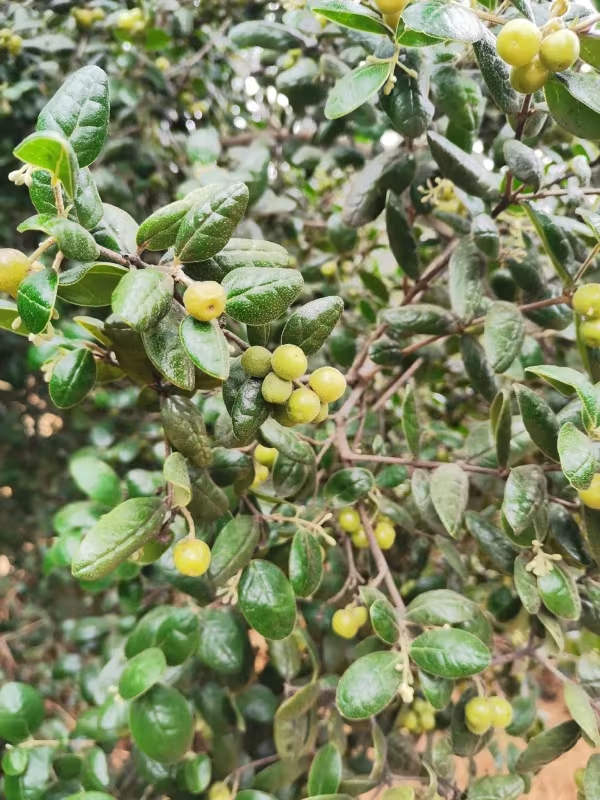
Description
Sowing dates
The propagation of Peumus boldus is typically achieved through seeds or vegetative cuttings. Seeds require a period of stratification to improve germination rates, as the dormancy period must be broken to ensure uniform seedling emergence.
Spring is the optimal time for sowing, specifically when soil temperatures stabilize between 15 and 18 degrees Celsius. Careful moisture management is required during the initial growth stages to prevent rot.
Cuttings are sourced from semi-hardwood stems harvested at the end of summer. Rooting occurs in controlled greenhouse environments, often utilizing rooting hormones to enhance the success rate of the propagation process.
Seedlings are raised in nurseries for one to two years before being transplanted to the main field. This nursery phase is crucial for building a strong root system, which helps the young trees withstand initial stress in the field.
Spacing between plants should be approximately 4 to 6 meters to accommodate the tree's slow growth pattern and long lifespan. Proper initial spacing prevents the need for future thinning, which can be disruptive to the trees.
Growing requirements
Peumus boldus, a member of the Monimiaceae family, is a native of Chilean foothills and thrives in Mediterranean-type climates. It is highly valued for its drought tolerance, a feature supported by its sclerophyllous, leathery leaves.
The species performs best in well-drained, loamy or rocky soils with neutral to slightly acidic pH levels. Waterlogging is detrimental to the plant and must be avoided through careful site selection and proper land preparation.
Boldo is a light-demanding species, though young plants may benefit from partial shading during the first few years of establishment. Full sun exposure is required for mature trees to maintain high vigor.
Temperature tolerance includes a moderate range; while the trees are resilient, they can be sensitive to severe, prolonged frosts. The cultivation site should offer protection from extreme winds and harsh winter freezes.
Drip irrigation is recommended in commercial plantations during prolonged drought to support steady growth. This ensures the continuous production of high-quality leaves throughout the hot summer months.
Yield
Yield in Boldo cultivation refers to the dry weight of harvested leaves, which serve as the primary source of pharmaceutical compounds. Economic productivity begins 5 to 7 years after initial planting.
Mature trees, particularly those older than 10 years, provide the highest yield. Strategic pruning to shape the canopy not only increases the productive surface area but also facilitates easier manual or mechanical harvesting.
Harvesting techniques focus on removing leaf-bearing branches without causing excessive physiological stress to the tree. Sustaining the plant’s longevity is as important as the immediate harvest yield.
Post-harvest management involves careful drying in shaded, well-ventilated areas or specialized temperature-controlled chambers to maintain the integrity of essential oils and active alkaloids.
Annual yields fluctuate based on plantation density and maintenance intensity, typically ranging from 2 to 5 tons of dried leaves per hectare under optimal conditions.
Main diseases and pests
Boldo is naturally resistant to many pests and diseases, largely due to the high concentration of bioactive essential oils and alkaloids within its tissues, which act as natural deterrents.
However, fungal infections can occur in environments with poor air circulation or excessive soil humidity. Maintaining proper canopy spacing is the most effective preventative measure against these threats.
Small-scale nursery threats include pests like scale insects or mites. These can be managed with integrated pest management (IPM) practices, emphasizing biological controls to preserve the organic quality of the crop.
Sanitary pruning, which involves the removal of diseased or dead wood, is essential for maintaining the overall health of the plantation. This practice minimizes the risk of pathogen spread between trees.
Regular monitoring of tree health ensures that any localized issues are addressed early, preventing the need for broad-spectrum chemical interventions that could harm the final product quality.
Harvesting
The harvest of Boldo is a critical operational phase timed to capture the peak concentration of active compounds. Leaves are generally harvested just before the onset of the flowering stage.
After being harvested, the leaves must be transported quickly to the drying facility. Prolonged storage in large piles can cause undesired heat buildup and fermentation, leading to a loss of quality.
Drying must be conducted at moderate temperatures (below 40 degrees Celsius) to prevent the volatilization of valuable essential oils. The final product should maintain its characteristic dark green color and pungent aroma.
Stored leaves are packed in airtight, moisture-resistant, and light-shielded containers to preserve their medicinal properties for long-term supply chains and processing needs.
Once the harvest is concluded, soil fertilization and maintenance tasks are performed to restore nutrient balance, ensuring the trees recover efficiently for the next growing season.