
Petromarula pinnata
Petromarula pinnata
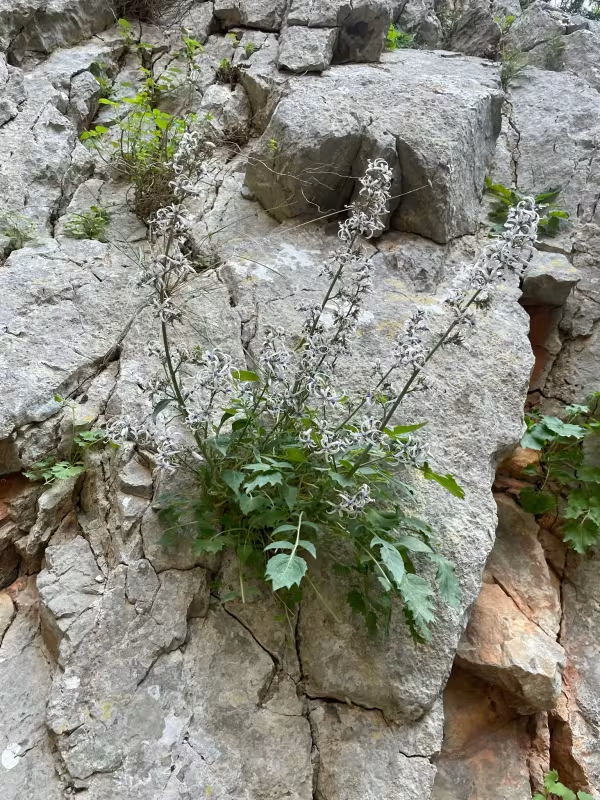
Description
Sowing dates
Petromarula pinnata is a perennial herbaceous plant, typically propagated from seeds sown in a protected environment during late winter or early spring. The seeds require a period of stratification to enhance germination, mimicking the natural dormancy-breaking conditions found in their native habitat.
When sowing directly in the field, it is crucial to wait until the soil temperature reaches at least 12–15 degrees Celsius. The seeds should be pressed lightly into the substrate without deep burial, as they require sufficient light exposure to initiate the germination process successfully.
In regions with a mild Mediterranean climate, autumn sowing is possible, which can lead to earlier vegetative growth in the following season. For controlled environment agriculture, staggered planting every three to four weeks ensures a continuous supply of fresh, edible leaves for the market.
The optimal planting density is approximately 20–25 plants per square meter. This spacing is vital for maintaining adequate airflow around the rosette leaves, which is necessary to prevent the accumulation of moisture and the subsequent development of fungal pathogens.
If utilizing transplants, seedlings should be moved to their permanent location once they reach 45–60 days of age. At this stage, the plants have developed a sturdy root system and a healthy rosette, which significantly improves their establishment and survival rate in field conditions.
Growing requirements
As an endemic plant to the island of Crete, Petromarula pinnata is uniquely adapted to growing in limestone rock crevices. In cultivation, it is essential to replicate these conditions by ensuring excellent soil drainage, often by incorporating gravel or sand into the growth medium.
The crop thrives in moderately fertile, light, and airy soils with a neutral to slightly alkaline pH. Waterlogging is highly detrimental to the root system, so on heavy clay soils, the construction of raised beds is highly recommended to mitigate the risk of root rot.
The plant requires plenty of sunlight to grow vigorously; however, in regions with intense summer heat, light afternoon shading is beneficial. Excessive direct heat can cause the leaves to toughen and stimulate the plant to shift prematurely into its flowering stage.
The ideal temperature range for active growth is between 18 and 24 degrees Celsius. While the plant possesses a degree of cold hardiness, it remains sensitive to drastic temperature fluctuations and high atmospheric humidity levels, which can impact the quality of the foliage.
Irrigation should be consistent yet moderate, focusing on keeping the root zone slightly moist rather than saturated. Drip irrigation is the most efficient method, as it prevents wetting the foliage, which helps to maintain plant health and reduces the risk of leaf diseases.
Yield
The economic value of Petromarula pinnata lies in its delicate, edible leaves, which are appreciated for their fresh, nuanced flavor. Yield depends significantly on the frequency of harvest and the precision of the nutritional management applied throughout the growing season.
The first commercial harvest can typically begin 70–90 days after transplanting. With proper management, including timely leaf trimming, it is possible to obtain several successive harvests per season, maximizing the total productivity of the planted area.
Under intensive production conditions, yields can reach 1.5–2 kilograms of high-quality produce per square meter. Productivity is generally higher in protected structures where environmental factors and nutrient supply can be precisely regulated for optimal growth.
Harvest quality is determined by the development stage of the rosette; young, tender leaves are the most desirable due to their lack of bitterness and superior aroma. As the plant matures, the leaves become fibrous, so timely harvesting is critical for maintaining market standards.
To optimize the output, balanced mineral fertilizers with reduced nitrogen levels should be used during the later stages of vegetation. This strategy promotes the development of high-quality leaf mass rather than the premature emergence of floral stalks.
Main diseases and pests
Petromarula pinnata is susceptible to several fungal diseases, which are primarily triggered by high humidity levels. Root rots are the most significant threat, often occurring when water management is improper and soil aeration is insufficient for the root system.
Powdery mildew can affect the leaves under conditions of high humidity and poor air circulation within the plant canopy. The primary method of control is strict adherence to optimal spacing and ensuring adequate ventilation in greenhouses or field patches.
Slugs and snails pose a major threat to young seedlings and can cause severe damage to the rosette foliage in a very short time. Mechanical barriers and regular monitoring of the area are the most effective non-chemical strategies for managing these mollusk pests.
Aphids may occasionally colonize the underside of the leaves, where they feed on cell sap and weaken the plant. When an infestation occurs, it is advisable to use biological control agents or botanical soaps to protect the edible portions of the crop effectively.
Since the leaves are intended for human consumption, the use of harsh synthetic pesticides is strongly discouraged. Integrated pest management, focusing on crop rotation, soil hygiene, and the promotion of beneficial insects, is the preferred approach for maintaining a healthy crop.