
Perralderia coronopifolia
Perralderia coronopifolia
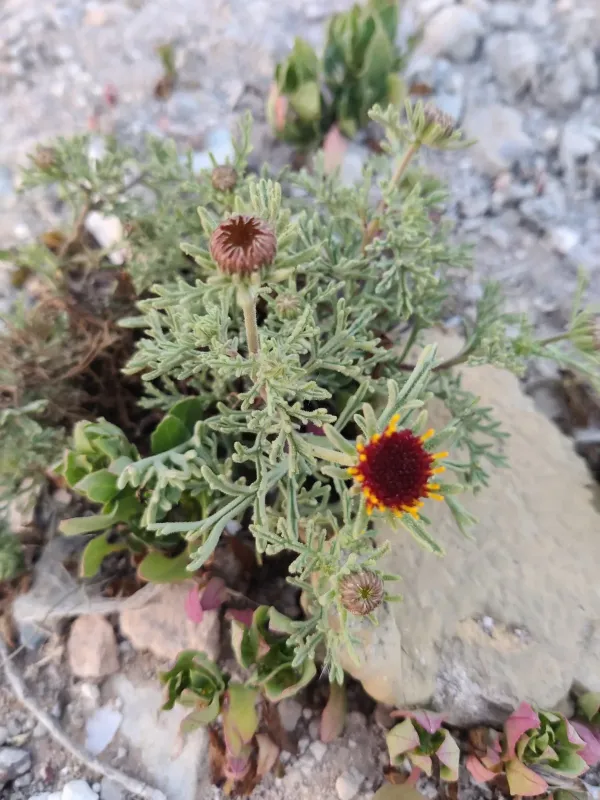
Description
Sowing dates
Perralderia coronopifolia is a botanical species belonging to the Asteraceae family, recognized for its adaptation to arid and semi-arid environments.
As a perennial plant, it exhibits a robust growth pattern, developing deep root systems that are essential for survival in its natural habitat.
Sowing should be timed to coincide with the beginning of the frost-free season, ensuring that temperatures are consistently warm enough for germination.
Seeds require light exposure for germination, therefore shallow placement in the soil is recommended to maximize the rate of emergence.
Proper spacing is crucial to prevent resource competition and to ensure that each individual plant has sufficient room for canopy development.
Growing requirements
The primary requirement for this crop is full sun exposure; it thrives in open areas where it can receive maximum solar radiation throughout the day.
Soil drainage is of paramount importance, as the species is highly sensitive to waterlogged conditions which often result in root rot and plant decline.
It prefers light, sandy, or rocky soil textures that allow for good aeration and rapid drainage, mimicking the conditions of its native landscape.
Regarding climate, the plant is well-adapted to high-temperature ranges and can withstand significant drought once the plants are fully established.
Minimal fertilization is generally required, as the species is adapted to nutrient-poor substrates, though a balanced nutrient supply can enhance early growth.
Main diseases and pests
The main threats include fungal diseases that typically thrive under conditions of high humidity or poor air circulation around the foliage.
Insect pests, including aphids and various mites, may target the plant, particularly in sheltered or poorly ventilated areas of the field.
Integrated pest management strategies are recommended to maintain plant health without relying on excessive chemical inputs.
Weed control is essential during the early stages of establishment, as young plants are not highly competitive with aggressive weeds.
Regular field scouting is advised to detect potential infestations early, preventing the spread of diseases across the agricultural site.