
Mountain horopito
Pseudowintera colorata (Raoul) Dandy
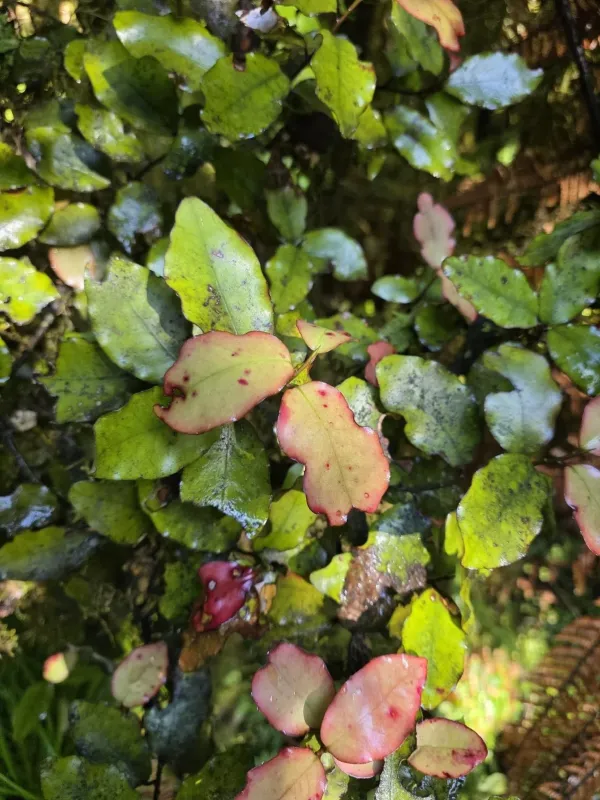
Description
Growing requirements
Pseudowintera colorata, widely known as Mountain Horopito or the New Zealand pepper tree, is a slow-growing evergreen shrub native to the forests of New Zealand. It belongs to the Winteraceae family, which is considered one of the most primitive families of flowering plants.
The plant is highly valued for its striking foliage. The leaves are leathery, small, and distinctively mottled with shades of red, green, and yellow, creating a stunning visual effect. The underside of the leaf is usually a pale, bluish-purple color, which adds to its unique aesthetic.
For successful cultivation, the plant requires moist, acidic, and well-draining soil rich in organic matter. It thrives in humid conditions and does not tolerate prolonged drought, making consistent irrigation essential during dry spells in a garden environment.
Ideal planting sites include partial shade or filtered light. While the plant can tolerate some sun, excessive exposure to harsh summer rays can damage the leaves. It also requires protection from strong, desiccating winds which can burn the evergreen foliage.
In landscaping, it is used for its year-round color interest. It is perfect for woodland garden settings, shaded borders, or as a structural container plant in regions where climate allows. Its resilience to pests makes it a relatively low-maintenance choice for experienced gardeners.
Main diseases and pests
The primary concern for Pseudowintera colorata is root rot caused by stagnant water or poorly drained soil conditions. To prevent this, ensure that the planting site has sufficient drainage or incorporate grit into the soil mix for container plants.
Pests are generally uncommon, but in poorly ventilated areas, the plant may occasionally suffer from infestations of scale insects or mealybugs. Regular monitoring and physical removal or biological treatments are usually sufficient to manage these minor pest issues.