
Pemphis acidula
Pemphis acidula
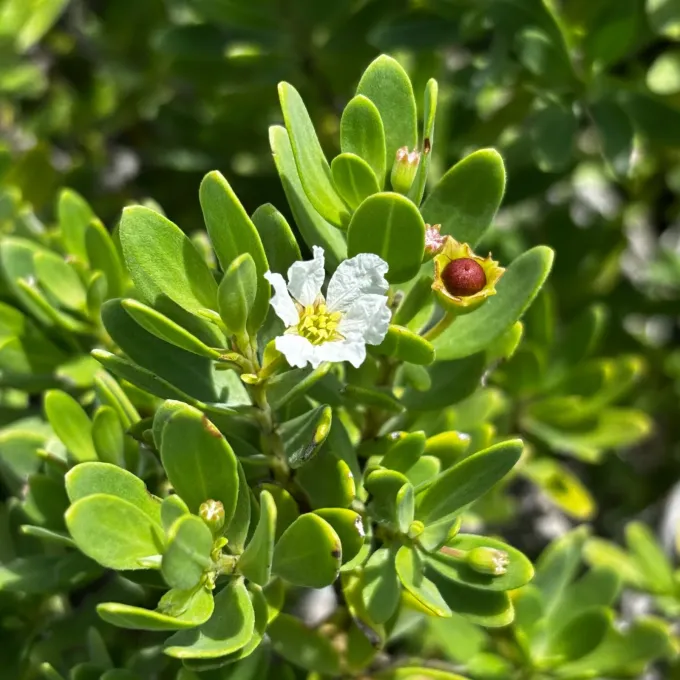
Description
Growing requirements
Pemphis acidula belongs to the Lythraceae family. It is an evergreen shrub or small tree naturally occurring in the tropical coastal regions of the Indian and Pacific Oceans.
This plant is an obligate halophyte, specifically adapted to grow in saline soils. It is commonly found on coral reefs and limestone shores, enduring constant exposure to salt spray and harsh winds.
Optimal development of Pemphis acidula requires a tropical climate with high levels of direct sunlight. The plant is extremely sensitive to freezing temperatures and lacks any cold-hardiness, making greenhouse cultivation necessary in temperate zones.
The substrate must provide excellent drainage, as water stagnation often leads to root rot. In its natural habitat, the plant thrives in rocky or sandy substrates with high mineral content and consistent moisture from tides.
When grown in cultivation, particularly for bonsai, the plant requires precise irrigation and fertilization routines to mimic the specific mineral balance of its coastal home. Its notoriously slow growth rate requires a long-term approach to maintenance and training.
Harvesting
The economic utility of Pemphis acidula is primarily rooted in its wood properties and aesthetic value. In parts of Southeast Asia, its wood is prized for its extreme density and resistance to decay, used historically for small tools and handles.
The species is most famous in the horticultural world as a premier subject for bonsai. Its naturally twisted trunk, fine foliage, and ability to thrive in restricted root spaces make it highly sought after by bonsai enthusiasts globally.
Harvesting wild specimens for bonsai production is strictly regulated in many native regions to protect coastal ecosystems. Nursery propagation has become the standard method to supply demand without damaging natural coastal vegetation.
Traditional uses include the occasional medicinal application of bark and leaves as an astringent by local coastal communities. However, there is no significant modern industrial or pharmaceutical extraction for this plant.
Agronomically, this species remains a niche crop. Its main roles are coastal erosion control due to its root strength and its status as a high-value ornamental plant for specialized tropical landscaping and bonsai nurseries.