
Peltogyne paniculata
Peltogyne paniculata Benth.
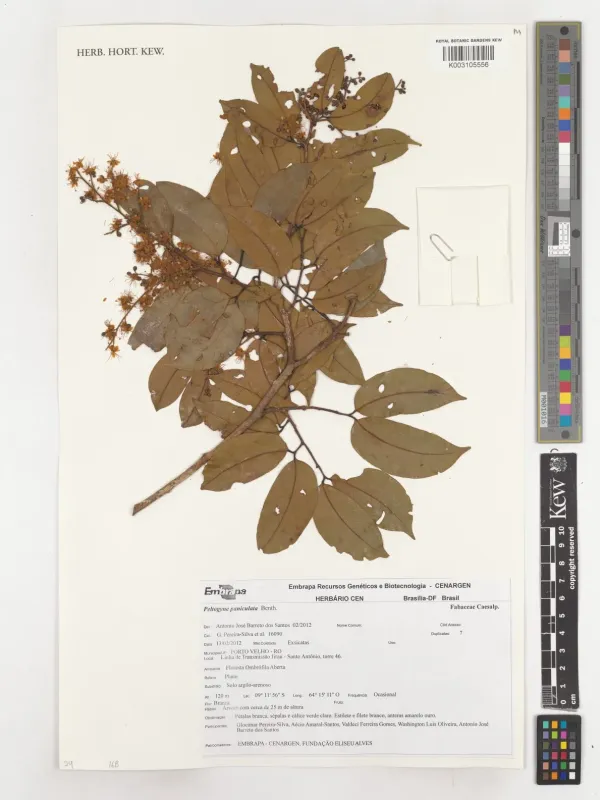
Description
Growing requirements
Peltogyne paniculata is a notable tree species belonging to the Fabaceae family, native to the tropical rainforests of South America. Known primarily as a source of high-quality timber, it is a significant element of the tropical canopy.
The tree exhibits slow growth patterns characteristic of hardwood species in primary tropical forests. It can reach impressive heights, developing a robust structure that supports its dense and durable timber production over many decades.
Cultivation requires fertile, well-draining soils with rich organic content. The species is highly sensitive to waterlogged conditions, which may impede root development and promote fungal growth in younger specimens.
The ideal environment is a stable tropical climate with high humidity and consistent temperatures. It thrives in regions where there is no frost and where rainfall is sufficient to support continuous growth throughout the year.
The primary economic use is the extraction of its wood, commercially referred to as purpleheart. This timber is highly valued in luxury cabinetry, boat building, and fine woodworking due to its hardness, durability, and distinctive purple coloration upon oxidation.
Main diseases and pests
Natural threats to Peltogyne paniculata include various species of wood-boring insects. These pests can significantly impact the quality of the timber, creating galleries in the wood that reduce its structural integrity and aesthetic value.
Fungal pathogens represent a major risk for nurseries, particularly those that do not maintain proper ventilation or sanitation protocols, leading to root rot and other systemic infections in saplings.
Deforestation and habitat fragmentation pose the most critical threat to wild populations of the species. Sustainable forest management is essential to prevent the loss of genetic diversity and ensure the tree's long-term survival.
Environmental stress, such as prolonged droughts or extreme fluctuations in humidity, can leave trees vulnerable to secondary pest infestations, further weakening the population health.
Proactive management of these trees involves systematic monitoring and integrated pest management strategies to mitigate damage from both biological threats and adverse climatic conditions.