
Pellionia repens
Pellionia repens (Lour.) Merr.
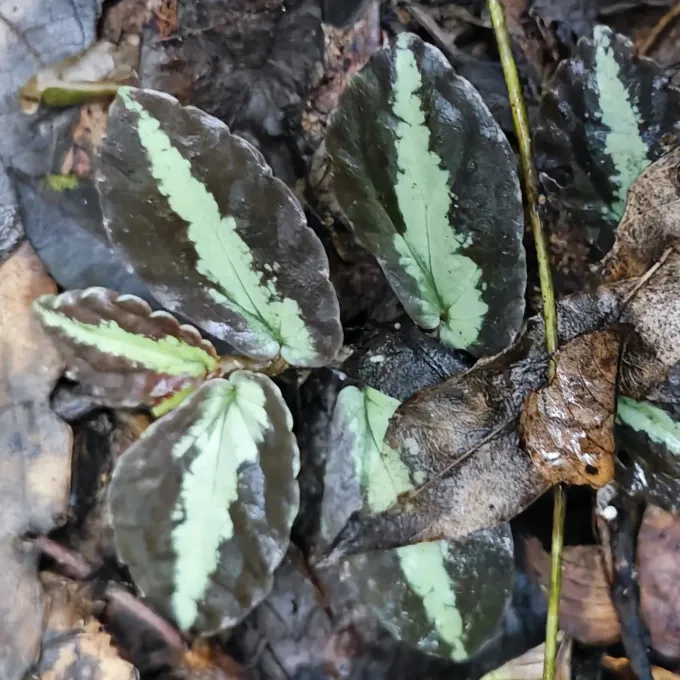
Description
Growing requirements
Pellionia repens, commonly known as the trailing watermelon begonia, belongs to the Urticaceae family. It is native to the tropical regions of Southeast Asia, where it thrives in the humid, shaded environments of the forest floor.
The culture requires a consistently warm climate with temperatures between 20°C and 25°C. Exposure to sudden drops in temperature or cold drafts should be strictly avoided to prevent foliage drop and stunted growth of the trailing stems.
High humidity levels are essential for the healthy development of this species. In agricultural or domestic settings, maintaining ambient humidity above 60% is recommended, often achieved through supplemental misting or the use of humidity trays.
Soil requirements involve a well-draining, peat-based potting mix that retains moisture without becoming waterlogged. Regular application of a balanced, water-soluble fertilizer during the active growing season supports the development of its ornamental foliage.
Indirect bright light is the ideal lighting condition for this plant. While it is tolerant of low light levels, placing it in direct sunlight will result in scorched leaves and loss of its distinctive leaf pattern, significantly reducing the aesthetic quality.
Main diseases and pests
The most common pests affecting Pellionia repens include spider mites and mealybugs. These pests thrive in dry conditions; therefore, maintaining proper humidity levels serves as a primary cultural control method against them.
Root rot is the most prevalent pathological threat, typically induced by overwatering and poor soil drainage. Ensuring that the top layer of the substrate dries slightly between waterings is the most effective strategy for preventing fungal infections.