
Pellacalyx saccardianus
Pellacalyx saccardianus
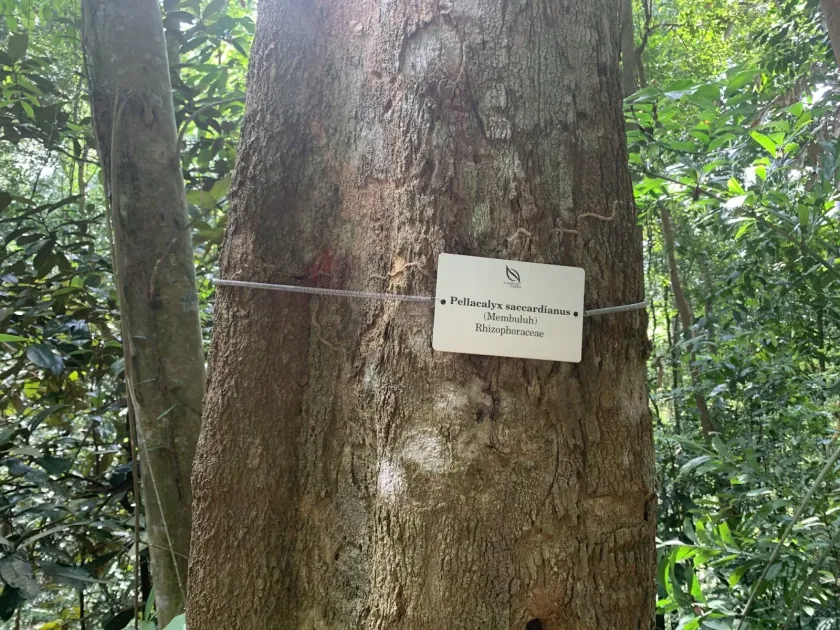
Description
Growing requirements
Pellacalyx saccardianus is a woody plant species belonging to the Rhizophoraceae family. Unlike many members of this family that are adapted to saline mangrove environments, this specific species is typically found in inland lowland tropical rainforests.
The native distribution of this tree covers several regions in Southeast Asia, including parts of Malaysia and the Philippines. It thrives in humid environments characterized by consistent rainfall throughout the year, which is essential for its vegetative growth and development.
In terms of soil and environmental requirements, the plant prefers deep, nutrient-rich, and well-drained soils. Maintaining high ambient humidity is crucial, as the plant is not well-adapted to arid conditions or prolonged moisture stress common in non-tropical zones.
Botanically, it is classified as an evergreen tree that reaches significant height within the forest canopy. Its structural morphology is adapted to low-light competition, and its leathery leaves are optimized for moisture retention in the humid, warm air of its natural habitat.
The economic and practical utility of Pellacalyx saccardianus is primarily linked to local forest resource management. The wood is traditionally used for small-scale construction and specialized timber production, contributing to the livelihoods of local forest-dwelling communities.