
Paspalum thunbergii
Paspalum thunbergii
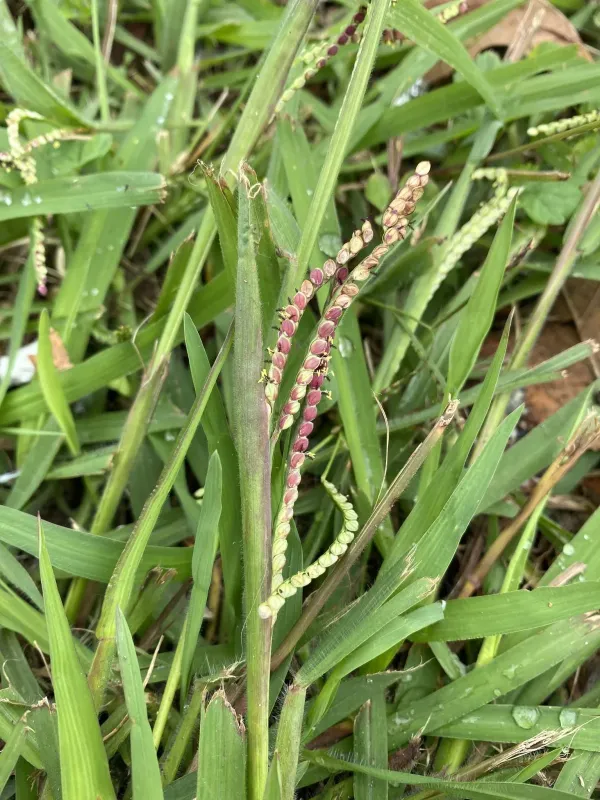
Description
Sowing dates
The optimal sowing time for this species is during the spring season when soil temperatures reach 12-15 degrees Celsius. Ensuring adequate moisture in the upper soil layer is crucial for successful seed germination, as the species exhibits relatively slow development in the early growth stages.
In regions with mild winters, autumn sowing may be viable, though spring planting remains the standard for achieving uniform stands. The seeding rate should be adjusted based on seed purity and the chosen planting method, with burial depth kept shallow, not exceeding 1-2 centimeters.
Paspalum thunbergii is well-adapted for vegetative propagation. On production sites, transplanting root divisions is often a preferred method to accelerate the establishment of a dense turf compared to seeding.
For seed-based establishment, preparing a fine, weed-free seedbed is essential. Since the seeds are small, they require careful burial and light rolling to ensure good soil-to-seed contact, which is vital for high emergence rates.
Planting schemes depend on the intended use; wide-row spacing is typically used for seed production, whereas row planting or broadcasting is preferred for establishing pastures and hay fields.
Growing requirements
Paspalum thunbergii is a member of the Poaceae family and is a warm-season perennial grass. It shows high adaptability to various soil types, ranging from loams to sandy soils with moderate nutrient availability.
The crop prefers well-lit, open areas, as shading significantly restricts biomass accumulation and nutritional quality. It performs best in soils ranging from slightly acidic to neutral pH levels.
Water availability is a primary requirement; while the grass displays moderate drought tolerance, it thrives and produces highest yields under conditions of consistent moisture, either through natural rainfall or irrigation.
Effective cultivation requires a warm climate with a long growing season. The plant has limited tolerance for prolonged freezing temperatures, which restricts its natural range to more temperate and tropical regions.
The plant features a robust root system, making it an excellent choice for erosion control and slope stabilization in agricultural and landscape management programs.
Yield
The biomass yield of Paspalum thunbergii is highly dependent on management practices and fertility levels. With proper agronomic care, the crop can support multiple harvests per season, providing a stable supply of high-quality forage.
Nitrogen applications during the first half of the vegetative growth phase stimulate rapid biomass production. Phosphorus and potassium applications are essential for improving stress resistance and overall forage quality.
Cutting management is critical; excessive or too frequent harvesting can deplete the plant's carbohydrate reserves in the root system, leading to a decline in productivity in subsequent seasons.
When well-irrigated, the dry matter yield is competitive with other warm-season grasses, making it a viable component in grazing systems. Its peak nutritional value is reached before the onset of the heading stage.
Seed yields are highly variable and are influenced by weather patterns during pollination and maturity, as well as the timing of harvest to avoid shattering losses.
Main diseases and pests
The primary threats include fungal diseases such as leaf rust and various leaf spot pathogens, which are most prevalent in high-humidity environments. Integrated pest management and proper airflow are the best preventive strategies.
Insects like grass flies and aphids can cause damage by feeding on young stems and inflorescences. Early detection through regular crop scouting is necessary to trigger timely biological or chemical control measures.
Weed competition is the most significant challenge during the establishment phase. Effectively controlling weeds in the first year is vital to prevent the crop from being choked out by invasive species.
Waterlogged soil conditions increase the risk of root rot pathogens. Maintaining proper drainage in fields is an essential practice to keep the root system healthy and productive.
Overall, Paspalum thunbergii is considered a resilient species. With consistent adherence to good agricultural practices, the impact of pests and diseases can be effectively mitigated.
Harvesting
For high-quality forage, the crop should be harvested at the late tillering or early heading stage. At this point, the balance between protein content, sugar, and fiber is optimal for animal nutrition.
When harvesting for hay, cutting during the flowering stage is standard, followed by rapid drying to preserve the leaf material, which contains the bulk of the plant's nutritional value.
Seed harvesting requires precision; it should be conducted when the inflorescences turn brownish. Harvesting too late leads to significant seed loss due to the natural shattering habit of the grass.
Post-harvest processing involves cleaning and drying the seeds to a low moisture content to ensure long-term viability during storage without loss of germination percentage.
A final application of nutrients after the last harvest of the season helps the plants recover and accumulate energy reserves, ensuring vigorous regrowth in the following spring.