
Paspalum quadrifarium
Paspalum quadrifarium
Description
Growing requirements
Paspalum quadrifarium is a robust perennial grass species belonging to the Poaceae family. It is recognized for its dense tufted growth habit and its significant biomass production, which makes it a notable representative of its genus in diverse grasslands.
Native to the regions of South America, specifically Argentina, Uruguay, and Brazil, this plant thrives in subtropical climates. It is well-adapted to the environmental conditions of the pampas and adjacent ecosystems, where it functions as a dominant component of the local flora.
The crop prefers well-drained but moist soils and demonstrates remarkable resilience to various environmental stressors, including soil compaction. It requires full sun exposure to achieve optimal growth rates and to produce high-quality vegetative matter for livestock consumption.
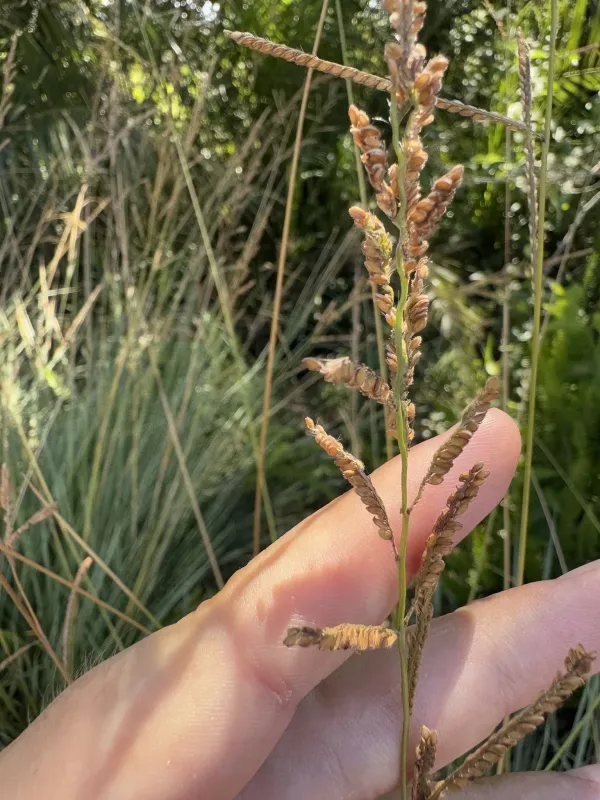
From a botanical standpoint, Paspalum quadrifarium features narrow, stiff leaves that emerge from a basal rosette. Its inflorescence is characterized by racemes arranged in a way that aligns spikelets into four distinct rows, a distinguishing feature that gives the species its specific name.
In terms of agricultural utility, this species is primarily valued as a forage grass. It is used in managed grazing systems due to its durability and ability to recover after defoliation, serving as a reliable source of roughage for ruminant livestock in its natural distribution areas.