
Paspalum pilosum
Paspalum pilosum
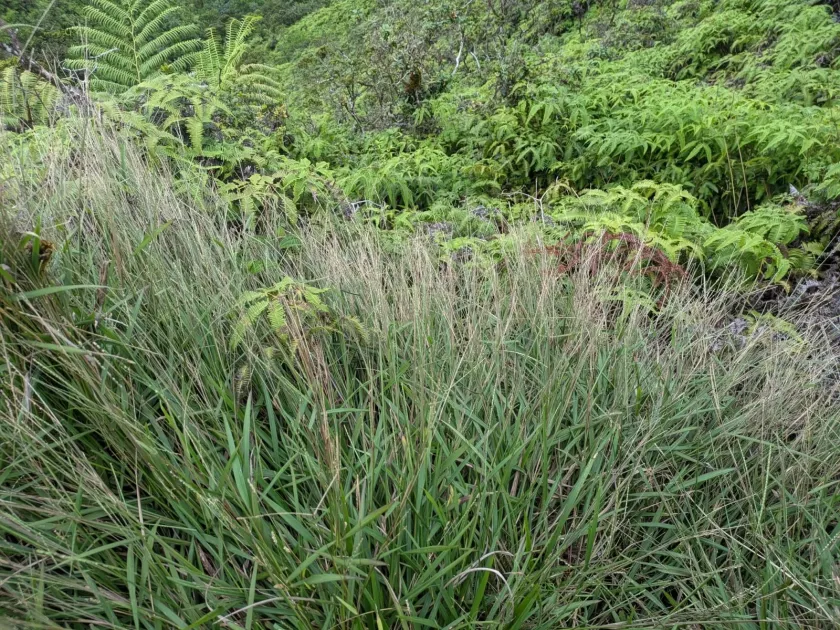
Description
Sowing dates
Paspalum pilosum is a perennial grass species belonging to the Poaceae family. Successful establishment typically requires sowing during the onset of the rainy season, which provides the necessary soil moisture to ensure high germination rates and initial seedling vigor.
Before sowing, the field must be cleared of competing perennial weeds to prevent early growth suppression. The seeds should be shallowly planted, as deep burial can significantly reduce emergence success in this species.
Vegetative propagation via clump division is a common practice for establishing pastures in regions where direct seeding may be less reliable. This method often results in a more uniform stand, which is highly beneficial for intensive livestock production.
Maintaining an appropriate seeding rate is crucial for forming a dense canopy, which helps in suppressing weeds. Proper preparation of the seedbed and initial weed control are fundamental steps for the long-term success of the pasture.
Applying starter fertilizers immediately after seedling emergence can significantly boost root development. This early intervention ensures the plants are well-anchored and capable of rapid growth during the favorable environmental conditions.
Growing requirements
Paspalum pilosum is known for its ability to thrive in acidic and nutrient-poor soils. This makes it an ideal choice for restoring degraded pastures in tropical regions where soil fertility is a limiting factor for more demanding crops.
The plant is highly thermophilic and lacks tolerance for freezing temperatures. It requires a warm climate with stable temperatures, as even mild frost can cause significant damage to the vegetative parts and halt its growth entirely.
High light availability is essential for the optimal growth of this grass. In shaded environments, the biomass production and tillering capacity drop significantly, which reduces its overall productivity as a pasture grass.
While the species is relatively hardy, it performs best when adequate soil moisture is maintained. It can withstand short dry periods but will benefit immensely from irrigation in areas with erratic rainfall to ensure consistent feed quality.
Soil aeration is critical for its health; therefore, regular maintenance of the pasture through light mechanical harrowing can help prevent soil compaction. This practice encourages better root penetration and sustains higher productivity levels over time.
Yield
The biomass yield of Paspalum pilosum is highly responsive to balanced mineral fertilization. Nitrogen, in particular, drives rapid leaf expansion and increases the forage value of the grass throughout the growing season.
When managed under rotational grazing, the species shows remarkable resilience and fast recovery rates. This allows farmers to maximize stocking density without compromising the long-term viability of the pasture.
Proper nutrient management, including adequate phosphorus and potassium levels, significantly enhances the protein content of the foliage. This improvement in quality translates to better weight gain for grazing livestock.
The potential for multiple harvests per season makes it a valuable resource for hay production. If timed correctly, the harvest can provide sufficient winter reserves while maintaining high nutritional profiles for cattle and other ruminants.
Sustainability of the pasture is a key economic advantage of this crop. With proper grazing intervals, the stand can remain productive for several years, reducing the need for costly periodic reseeding efforts.
Main diseases and pests
Fungal diseases, especially rust, are the most significant threats to this crop in humid climates. These pathogens thrive in stagnant air, leading to leaf necrosis and a decline in the overall quality of the forage.
Various insect pests, including root-feeding larvae, can cause substantial damage to the stand. Regular scouting and monitoring are necessary to identify early infestations and prevent them from reaching economic threshold levels.
Weed competition is a constant challenge, particularly with invasive species that share similar niches. Effective weed management strategies are needed to ensure the purity and vitality of the grass population.
To minimize disease pressure, it is essential to manage canopy density and ensure good airflow across the field. Reducing humidity levels within the plant stand is a highly effective way to inhibit fungal outbreaks.
Integrated pest management, involving a combination of cultural and biological controls, is the preferred approach. This reduces reliance on chemical treatments, promoting a healthier and more sustainable agricultural ecosystem.
Harvesting
For high-quality hay, harvesting should be performed before the plants reach the flowering stage. At this phenological phase, the leaves and stems contain the peak concentration of essential nutrients and soluble sugars.
The height of the cut is vital for stand regeneration. Cutting too close to the ground can damage the plant's crown and slow down recovery significantly, whereas keeping a stubble of at least 5-8 centimeters promotes rapid regrowth.
Using mechanical tedders to flip the cut material can significantly accelerate the drying process. This is particularly important for producing high-quality hay in humid environments where drying time needs to be minimized to avoid spoilage.
Storage should prioritize keeping the harvested forage in a dry, well-ventilated area to prevent mold growth and overheating. Ideal moisture content for long-term storage is below 18 percent to ensure the feed remains safe for consumption.
Grazing management is essentially a continuous harvest process. By strictly following a rotational cycle, farmers can prevent overgrazing, allowing the Paspalum pilosum to regain its vigor before the next feeding cycle begins.